by
Ryan Clement

At 5.30pm on 6 May 2023, my son and I were at Anfield for the Liverpool match against Brentford. It was Coronation Day. I was not aware until the day before that teams were required to play the National Anthem (God Save the King) and that may cause a problem with some sectors of the crowd. A friend of mine put me on notice on the Friday by directing me to a statement put out by Liverpool Football Club.
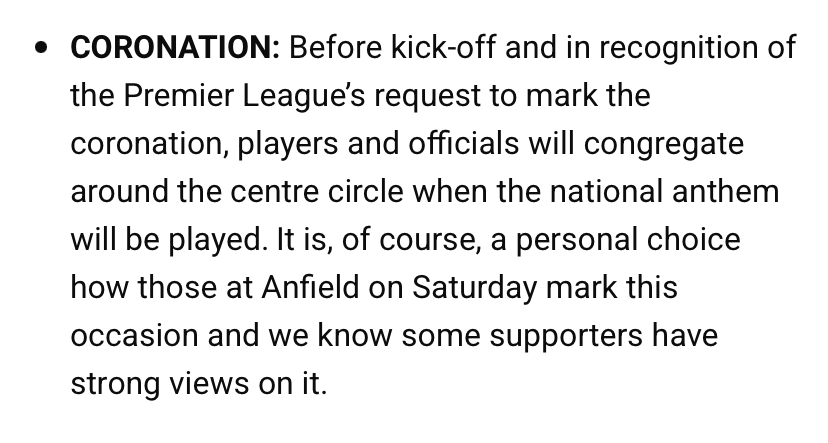
After reading the statement, I undertook some research to understand what these, ‘strong views,’ were and why they were held. There is, literally, a raft of information about it. So I was now prepared for what might be.
I visit Anfield quite a few times during the football season and I video a lot. This game was no exception (hence, the videos below). After the teams ran out it was announced that the National Anthem would be played. We observed. You all know what happened next (but if not, see below). Driving back down south, we listened to much debate on the radio over what we had witnessed. By the time we arrived back in Surrey after midnight it was all over the internet and social media. There were and are some angry, very angry, exchanges by many. These exchanges got me thinking about the notion of ‘freedom of speech’ and ‘freedom of expression.’ I understand both sides of the debate. Some argue that what they witnessed in person, on television and or radio was disrespectful or, possibly, even treason. Others argue that in a democracy people have the right to protest, freedom of speech and or expression.
This blog is not about arguing for one side or the other. Both sides of the debate have argued and are arguing their case vociferously (some eloquently, some less so) without my tuppence worth. However, what this is about, are the rights by which both views might or could be viewed. For me, a place to find assistance is in the Human Rights Act 1998 and the Convention for the Protection of Human Rights and Fundamental Freedoms/European Convention on Human Rights.
ARTICLE 10
Freedom of expression
1. Everyone has the right to freedom of expression. This right shall include freedom to hold opinions and to receive and impart information and ideas without interference by public authority and regardless of frontiers. This Article shall not prevent States from requiring the licensing of broadcasting, television or cinema enterprises.
2. The exercise of these freedoms, since it carries with it duties and responsibilities, may be subject to such formalities, conditions, restrictions or penalties as are prescribed by law and are necessary in a democratic society, in the interests of national security, territorial integrity or public safety, for the prevention of disorder or crime, for the protection of health or morals, for the protection of the reputation or rights of others, for preventing the disclosure of information received in confidence, or for maintaining the authority and impartiality of the judiciary.
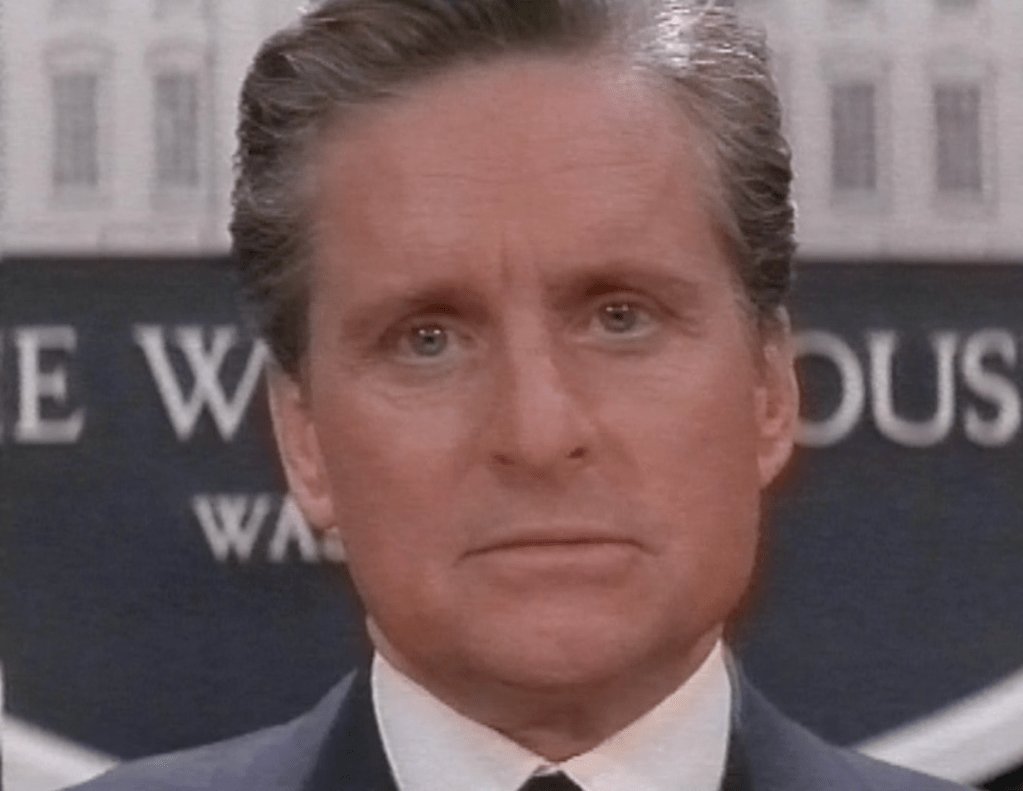
I believe that most of us would accept that, ‘Everyone has the right to freedom of expression.’ The problem for most of us (myself included, of course – hence ‘us’) is when that which is expressed by one offends the very core and fundamental values of another to the point that such view is received as not even worthy of being heard (let alone said) and is deemed repulsive. At what point do we draw the line and say that a view is unacceptable to be expressed publicly? Before some say no line should be drawn, I would respectfully disagree and say think again. Think about ‘Hate speeches’ or speeches that advocate violence against innocent victims etc. It’s not easy because sometimes it is difficult to accept that some people can hold views that some of us are diametrically opposed to; views that are not based on ‘Hate speeches’ or do not advocate violence against innocent victims etc. I think this clip from the film, The American President by Michael Douglas, sums up this point succinctly.
Like I said, I have read some strong views and some questioning some protestors’ patriotism or, interestingly, some of their rights to remain in the U.K. I confess, I struggled with that one! Neither my son nor I was a protestor – it is not my/our quarrel. However, I am no more or no less a supporter of my team than those who were protesting. I cannot speak for someone else’s patriotism and neither do I wish to; they can speak for themselves! All I can say is, if you excuse the pun, our means or paths to our goals may be different but our goals can still be the same.
The National Anthem played at Liverpool v Brentford on 6 May 2023
The National Anthem and You’ll Never Walk Alone at Liverpool v Brentford on 6 May 2023
Please note that I DO NOT own the copyright to the image of Mr. Michael Douglas, which is an image taken from the film, The American President (https://www.imdb.com/title/tt0112346/).
Ryan Clement, LLM, BA, BSc, Barrister
https://www.youtube.com/@RyanClement1
Copyright © Ryan Clement 2023
 Ryan Clement