by
Ryan Clement
I HAVE WRITTEN about prostate cancer awareness many times, and each time is not one time too many if it helps educate and save lives.
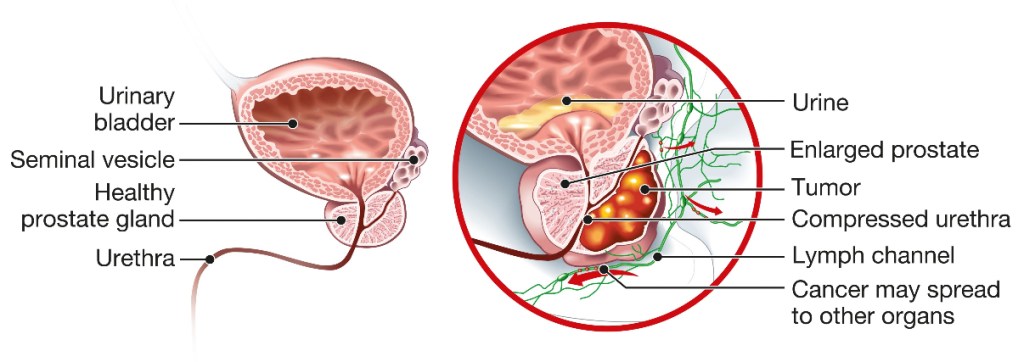
PROSTATE CANCER is a disease that develops within the prostate gland. It is currently the most common cancer among men in the UK. Although it is a serious condition, survival rates are high: nearly 80% of men diagnosed survive for at least 10 years. It is the second most common cancer overall, following breast cancer. Approximately 55,300 new cases per year and, sadly, there are approximately 12,200 deaths per year.
ONE OF THE CHALLENGES of prostate cancer is that it often presents no symptoms during its early stages. I have heard this from friends who have been diagnosed with prostate cancer. Sadly, I lost a friend as recently as last year to PC. However, as the condition progresses, indicators may include changes in urination: Specifically, a need to urinate more frequently, especially during the night; sexual function: The onset of erectile dysfunction.
WHILE ANY MAN can develop prostate cancer, three main factors significantly increase the likelihood.
- Age: Risk rises as you get older. It is rare in men under 50, and the majority of cases are diagnosed in men aged 50 and above.
- Ethnicity: Black men are more likely to get prostate cancer than other men. In the UK, about 1 in 4 Black men will get prostate cancer in their lifetime.
- Family History: You are 2.5 times more likely to get prostate cancer if your father or brother has had it, particularly if they were diagnosed under the age of 60.
THERE IS CURRENTLY no national screening programme for prostate cancer in the UK. I know some disagree to it, but, in my view, there should be. One of the arguments against it is that the available tests are not always accurate and can sometimes lead to unnecessary treatment for slow-growing cancers that would not have caused problems. However, the NHS provides the following testing pathway:
PSA Test: Men over 50 can request a PSA (Prostate Specific Antigen) blood test from their GP, even without symptoms. This measures the level of a specific protein in the blood. A high level can be a sign of cancer, but it can also indicate other common conditions like a urine infection or an enlarged prostate.
Digital Rectal Examination (DRE): A doctor may physically examine the prostate gland to check for abnormalities.
MRI Scan: If a PSA test suggests a problem, an MRI scan is often used to create a detailed image of the prostate to see if there is a suspicious growth.
Biopsy: The only way to definitively diagnose cancer is a biopsy, where small samples of tissue are taken from the prostate for analysis. This is usually only done if the MRI scan shows a potential issue.
WHATEVER YOUR VIEW, please ensure that you, a family member or a loved one get checked and have regular checks, if only for peace of mind ✌🏾and longevity 🙏🏾
 Ryan Clement