by
Ryan Clement, barrister
On Day One of my book, ‘Discrimination Law in Employment in 7 days, I touch on the Separation of Powers.
One Day One of my book
Discrimination Law in Employment in 7 days I touch on the importance of the separation of powers.
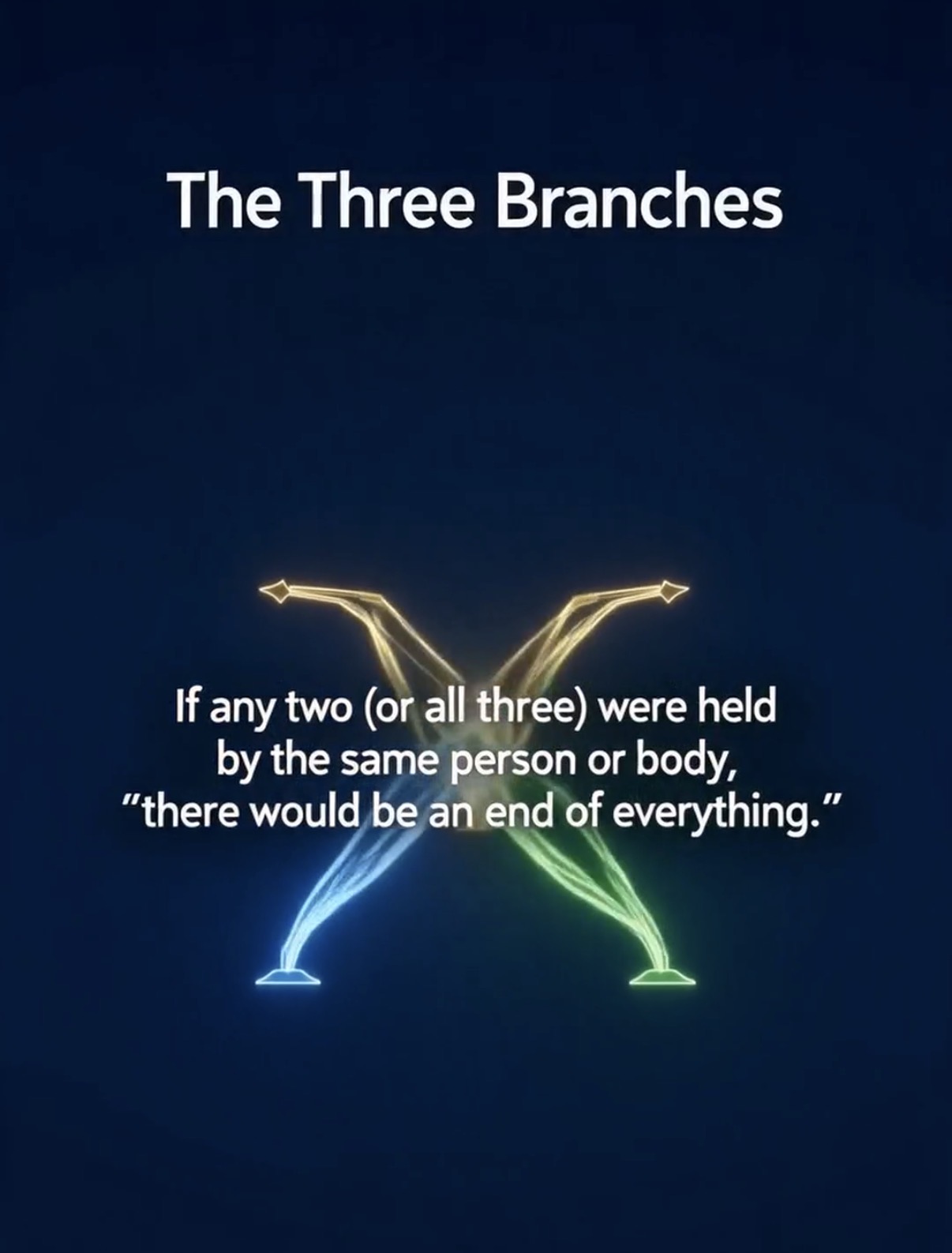
Montesquieu’s theory of the separation of powers, primarily detailed in his 1748 masterpiece, The Spirit of the Laws, remains one of the most influential political doctrines in history. He argued that to prevent tyranny and preserve liberty, the functions of government must be divided among different branches.
Montesquieu identified three types of power that exist in every state: Executive Power; Legislative Power; and Judicial Power. His core concern was the preservation of political liberty. He famously stated:
“When the legislative and executive powers are united in the same person, or in the same body of magistrates, there can be no liberty; because apprehensions may arise, lest the same monarch or senate should enact tyrannical laws, to execute them in a tyrannical manner.”
This week it was famously said to resounding applause:
“Executive Power is subject to checks and balances!”
I’ll raise a glass (or two) to that! 🥂
Copyright © Ryan Clement 2026
 Ryan Clement