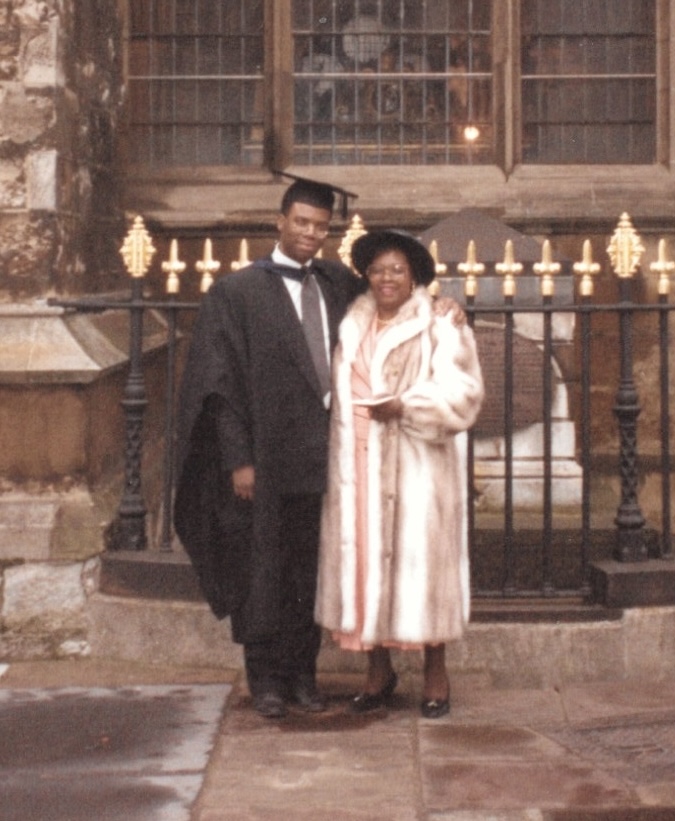
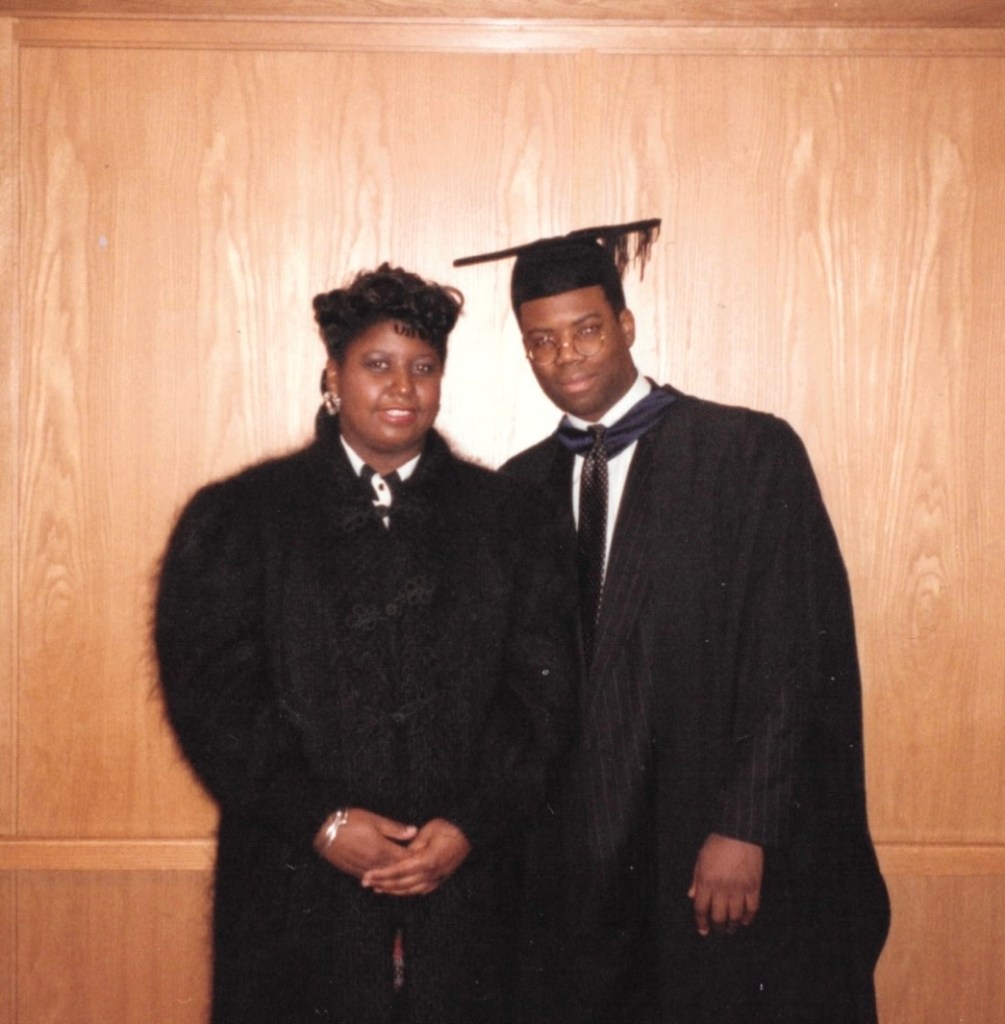
28 Years ago on 10 October 1996 I was Called to the Bar of England & Wales. I remember the day as if it were only yesterday. I made my way to Chancery Lane, in London, to collect my wig and gown for the day’s event. Many would be barrister, alone or accompanied by family, loved ones and friends, were doing the same. Later that day, I drove into town with my mother and soulmate, Sue, to be Called. Sadly, both are no longer with us in person but are in spirit.
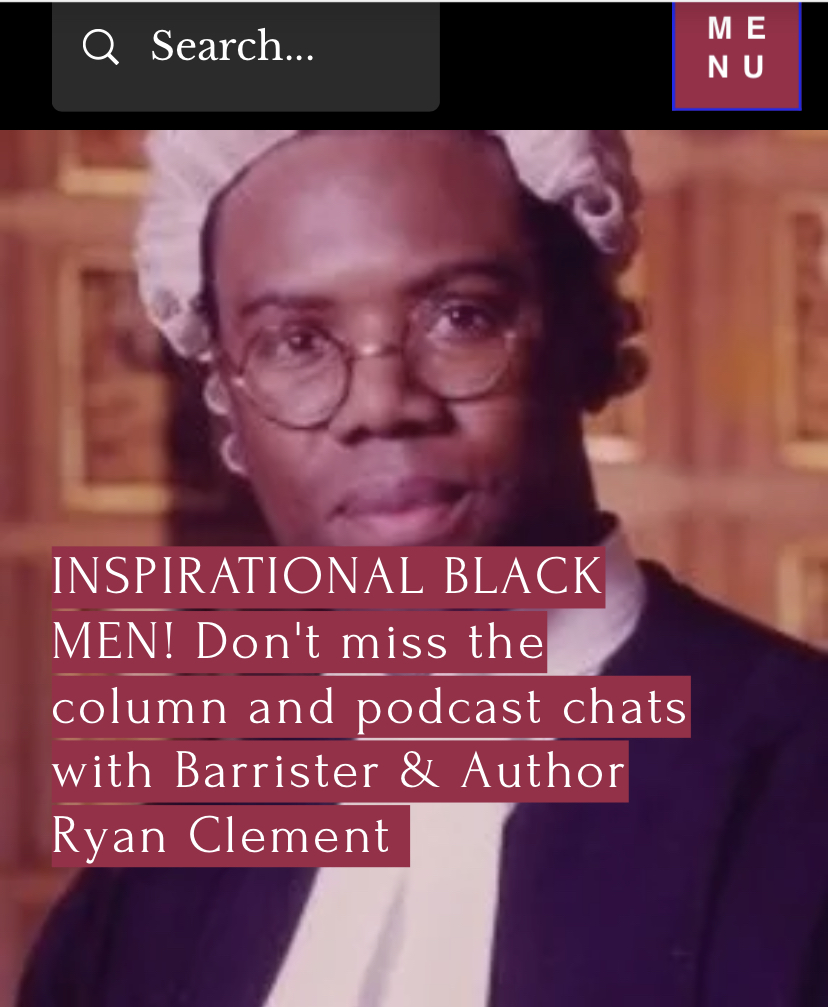
Many of my Learned Friends have photographs of their big day. Mine went further. On that day, the BBC was making a documentary about barristers and, ‘the oldest legal profession, the Bar!’ A friend of mine taped the programme when it was aired. It wasn’t quite my 15 minutes of fame; nearer 5 seconds, but it has nevertheless been captured forever!
WHO doesn’t like a good read? To each her/his/their/its own. It’s personal. For me, I like, nay, love a book that transcends me to a place beyond the surface of the plot alone or has an underlying theme that gets me thinking further about a subject matter or challenges a thought I possess or once possessed. Although mathematics was my first love, for which I gained a distinction in later years, I recall frequently writing stories at school just for fun. Even later in life I did a creative writing course, a screenwriting course and, later still, a BA in English Literature. I liked most of the books on my degree and loved some. It felt great studying The Color Purple, with which I was already familiar, because Alice Walker was and is one of my favourite authors; I have read all her work and had the pleasure of seeing her both in London and Edinburgh. She sits amongst some of my other favourites, Toni Morrison (whom I also met), Dr Maya Angelou (whom I regret never meeting despite my grave attempts, twice!), Richard Wright, James Baldwin and more.
The earliest influence on me was The Greatest – My Own Story – by Muhammed Ali. I read this book when I was in Primary School and was mesmerised. It exposed me to a world – or, rather, people in the world – that showed the good, the bad and the indifferent. It began to open my eyes. As years went by, I read many books that I could either relate to at the time or would later. Toni Morrison’s The Bluest Eye, being one of these. I was brought up at a time when beauty and beautiful were not used in association with or about people with whom I shared a particular characteristic. The Bluest Eye reminded me of what some people were trying to become. I can still see those skin lightening creams in my mind’s eye as I now write. In those days, beauty was not truly in the eyes of the beholder but in the constructive eyes of the society in which I lived.
I love biographies and have read too many to mention. I read Alex Haley’s Roots at a very young age. I read it over the space of a week. I put it down occasionally to take in the cruelty against humanity about which I was reading. It was a lot for my young fertile mind to take in and digest. I have never seen the television series – either of them – and so it shall remain. It would be remiss of me not to mention Long Walk to Freedom, the autography of Nelson Mandela. This book had an effect on me on many levels. It was a world that was so far removed from my own and yet spoke to me in a language I thought I understood. The strength of Mr Mandela is a beacon for us all. Of recent times, Barack Obama’s Dreams From My Fatherand The Audacity of Hope were books I read over two weekends. However, a book I read in one sitting over one weekend was, Michelle Obama’s Becoming. What a read! What a book! Brilliant!
I read a lot for my professional work, so I rarely get the time to read for leisure. However, three books in particular moved and enlightened me last and earlier this year. In no particular order. First is Isabel Wilkerson’s Caste. There is a story behind this. My then 13-year old son bought me this book for my birthday. I knew I would read it someday but did not do so until I heard Edward Enninful – he, of many accomplishments, including the editor of Vogue – claimed, on the BBC’s Desert Island Discs, that it would be the one book he would select were he to be a castaway on a desert island. So, that very said Sunday, I started to read it. What a powerful book. I once wrote a short note about why, as a relatively educated professional with many degrees and post-grads, I was still playing catch-up on my ancestor’s history? I knew more about 1066 than what took place around 1526 or colonisation. Caste tackles big issues about which I am still learning. Another book that opened my mind’s eye recently was Sathnam Sanghera’s Empireland. I read this on the back of Caste. In my view, the two complemented each other because it was filling in the gaps in my real education. How learned are you when you have no knowledge of your own ancestry? In some ways, Ralph Ellison’s The Invisible Man springs to mind. When I was researching for a book, I read plenty on genetics and sought to discover how different we truly are, biologically. I wanted to make sure that I had my facts right before making any profound statements in print. I concluded, which wasn’t very profound at all, that there was one human race, period. A book that I enjoyed was Yuval Noah Harari’s Sapiens: A Brief History of Mankind. I mention this book because it links to the last book I finished recently.
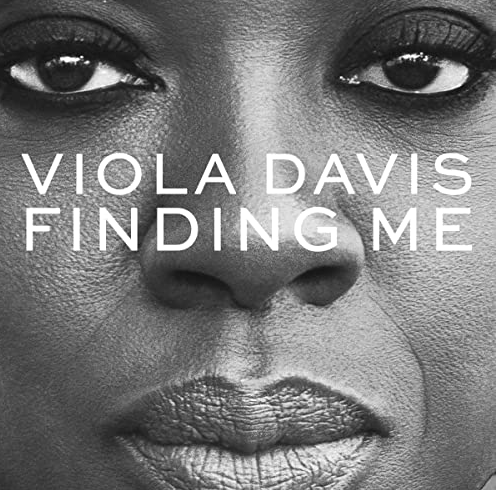
Recently, I had the pleasure of meeting a very dear friend of mine, Tanja, for dinner in London. We spoke about the arts, politics, history and books, to name a few. Ashamedly, as well as eating my own meal of monkfish and a dessert of Knickerblocker Glory, I could not resist sampling some of her sea bass and dessert of Fig and Pistachio Feuilleté. I apologised to her husband, also a very dear friend of mine, profusely on the mobile for doing so and offered to pay for the fast food she would undoubtedly have cause to consume when we part. However, before we did that, she recommended, highly, that I read Viola Davis’ biography, Finding Me, and texted me the link so that I wouldn’t forget. OMG! What a read! I read it one sitting. It is brutally honest and at times, many times, unbearably painful. But it is a page-turner. It’s deep! Sometimes you read a biography and you question how much is real. After all, unless you set out to write your life’s story at the age of 5, how can you recall so much. When a successful person says, ‘I always knew from the age of X that I would make it,’ I question the authenticity without corroborative evidence to support such a bold and ambitious statement. But her biography grips you. It feels real. You are on a journey with the good, the not so good with warts and all, and the downright horrible. For me, it made me love her and her artistic work even more than I did before I read it. When I think of how tough some times have been, I shall simply think of her journey to become the bright star she is today. She is a true inspiration to us all. Thank you for the recommendation!
Oh, finally, the link. After this, my dear friend recommended another book to me, but thought I may already have read it. She was right, I had. It was Sapiens. There is one race, the Human Race, being that to which we all belong and of which we are all a member!
TODAY’s blog is unusual. I say this because it is not so much a blog in the ordinary sense but one that does little more than introduce my latest video. I would not normally use this platform for a video premier, but there is a link. This video is the visual form of the first three of six blogs I wrote for Mental Health Awareness Week 2023, which were so well received, I was asked to produce a video. However, rather than make a video afresh, I read and recorded the blogs – warts and all, but I still managed to record them in just one sitting whilst doing the day job, which also entails a lot of talking!
I would like to think that the two videos are educational both to the not-yet-informed and the informed. Feel free to share the link and or this blog to family and friends; HR, Human Resources and Managers; colleagues, employers and employees.
In some ways, the chosen theme for MHAW 2023, anxiety, is connected. I am not saying that his temporary bout of anxiousness over his exams compares to some of the experiences openly shared within the articles. But I am and was aware of a certain level of anxiousness on display that I don’t recall experiencing when I was his age – admittedly that was a long time ago and the passage of time may have been very kind to my undoubtedly faded recollection. However, for certain, there are competing external pressures that simply were not there when I was growing up: mobile phones; Xbox; PS whatever number it is (I’ve lost count!); Fortnite; Roblox etc. I had a Spectrum and a Gameboy, which enabled me to play tennis that you could play for many hours, if you wished (I didn’t), with a slow-moving square tennis ball that refused to respond in any way to my heavy top spins and still not score a single point unless you left it playing by itself – it was that slow! Space Invaders and Pac Man. That’s it! These weren’t addictive enough, not even close, to prevent me from wanting me to socialise with my friends ‘in person,’ rather than the current trend of my son’s peers where the dominant form of communication between them is ‘online.’ On reflection, the limit of my technological distractions probably encouraged me to socialise in person more than be preoccupied with gadgets a few inches – ok, a few centimetres – away from my face. Remember, I am also speaking of pre-World Wide Web. Yes, I explain to my son, there was once a time! The puzzled look on his face at this revelation is a joy to witness. Thank you, Mr. Berners-Lee.
I adopt the sound advice contained in the article, ‘Help Your Child the Night Before Exams.’ It was the author of that article that suggested that I write this piece. Thank you. My son’s mother is a teacher. She leads the discussion with our son on the study plan and we all seek to implement it. I would not be telling The Truth, The Whole Truth and Nothing But The Truth if I were to say it is as simple as that. No, we don’t just pin the plan on his room’s notice board and leave him solely to it. Oh no! That would not work. As the author wrote, which Mr. Mandela himself used, “Vision without action is merely a dream. Action without vision is merely passing time. But vision with action can change the world.” Ok, it’s not quite on point but it’s so good a quote, I adopt it in part and leave it to the reader to tease out the relevant parts that apply to this article. No, we have to check that the plan is being executed and monitor progress against it. Remember, we are competing with the said modern technological gadgets to which I have already referred. I get it! But we know how tough it is with a reasonable level of formal education let alone without. Trust me, even though our son is the product of parents with a number of degrees and postgraduate qualifications that cannot be counted on the fingers of one hand, hard work still needs to be done. Humans are not like racehorses. Nurture dominates Nature – Oops, have I just opened an age-old debate?
Personally, I had no pressure from my parents when it came to studying. I can say the same for our son’s mother. Our parents created the environment in which to grow, create, develop and learn. We were left to do the rest. There was also the appreciation of how hard they worked. In my book, Like Father, Like Son, I wrote a piece about Rupert’s mother’s many jobs. This part was both easy and hard for me because I simply based that part on my own mother, whose anniversary of leaving us (in person) is soon to dawn upon us. To some, nay, a large degree that made me hungry or hungrier to do well as a small token of a return for her hard work. Of course, we can never fully repay our parents or guardians for the many sacrifices they make for us unconditionally. I mention this because we are potentially dealing with different dynamics in our children’s case. As for our son, he sees mother planning for class, marking, reading almost everyday! He sees father, prepping for trial, reading, writing opinions almost everyday! Do these alone conjure and stir up the same level of inspiration that motivated and drove both parents? Answers on a postcard, please. Like I said, I believe there are many more external pressures on our children’s lives today with which to compete. Notwithstanding all that, however, I am a firm believer that we are all stakeholders in the formal education of ‘our’ children whether biological parents or not. The very least, therefore, we owe to them is to prepare and help them during the many days and nights before their exams to enable them to perform to the best of their natured and nurtured abilities.
TODAY is day five of Mental Health Awareness Week in the U.K. and, as you know, the theme is anxiety. It is also the last, the shortest and final blog in this series from me. But it will not be the last that I shall be writing on the importance of mental health awareness in general.
I have chosen the title, ‘remedy,’ as the final in the series. I would have preferred to have used this title in the ‘cure’ sense. Unfortunately, that is way beyond me. If a disabled employee feels they have been discriminated against by their employer, they should raise a grievance in accordance with the company handbook.
Grievance in the Workplace
However, they also have the right to commence proceedings within 3 months less 1 day (notify ACAS) in the employment tribunal. I should pause there. For ease of reference, I have deliberately been using employee/employer references throughout these blogs, as in an employee under a contract of employment. However, ‘employment’ is defined under the Equality Act 2010 as meaning, ‘employment under a contract of employment, a contract of apprenticeship or a contract personally to do work.’ Therefore, you can see that it is wider than just an employee/employer relationship under a contract of employment. In other words, for example, if a worker is contracted, ‘personally to do work,’ subject to some restrictions, they have a right to bring a claim under the Equality Act 2010. This is not to be confused with a claim for unfair dismissal under the Employment Rights Act 1996, which can only be brought by an employee.
TODAY is Day four of Mental Health Awareness Week in the U.K. and for which the theme is anxiety.
Indirect discrimination and the first requirement on an employer to make reasonable adjustments are based on the employer applying PCPs – provision, criterion or practice – and their effect(s). However, before we look at PCPs, let us remind ourselves of what makes a person disabled under s.6 of the Equality Act 2010: A person has a disability if— (a) they have a physical or mental impairment, and (b) the impairment has a substantial and long-term adverse effect on their ability to carry out normal day-to-day activities. So, we have (1) an impairment that has (2) a substantial and long-term adverse effect on (3) the applicant’s/employee’s ability to carry out normal day-to-day activities. For our purposes, our employee friend suffers from anxiety, which is their impairment. I pause here for a moment. Normally, the impairment would be enough for a person to be medically disabled. However,(2) and (3) must be fulfilled for there to be a statutory disability under s.6. In other words, the medical and statutory disabilities do not necessarily marry!
So, what would be deemed, ‘substantial and long-term?’ Substantial means more than minor or trivial and the effect of an impairment is long-term if—(a) it has lasted for at least 12 months, (b) it is likely to last for at least 12 months, or (c) it is likely to last for the rest of the life of the person affected.
Meaning of ‘normal day-to-day activities’
“In general, day-to-day activities are things people do on a regular or daily basis, and examples include shopping, reading and writing, having a conversation or using the telephone, watching television, getting washed and dressed, preparing and eating food, carrying out household tasks, walking and travelling by various forms of transport, and taking part in social activities. Normal day-to-day activities can include general work-related activities, and study and education- related activities, such as interacting with colleagues, following instructions, using a computer, driving, carrying out interviews, preparing written documents, and keeping to a timetable or a shift pattern.” See the blog, ‘Don’t forget your normal day to day activities.‘
Therefore, generally speaking, the concept of disability under the 2010 Act is based primarily on cause and effect (and the extent/degree of that effect). So, we could say our friend is disabled because they suffer from anxiety, which, in their case, has lasted for at least 12 months and has a substantial effect on their carrying out the shopping, reading and writing etc.
(1) An employer discriminates against an employee if it applies to the employee a PCP that is discriminatory in relation to the employee’s disability. A PCP is discriminatory in relation to the employee’s disability if—(a) the employer applies, or would apply, it to non-disabled people, (b) it puts, or would put, disabled employees at a particular disadvantage when compared with those who are not disabled, (c) it puts, or would put, the disabled employee at that disadvantage, and (d) the employer cannot show the PCP to be a proportionate means of achieving a legitimate aim. Therefore, what appears to be a harmless PCP on the face it, when applied equally to all may, nevertheless, put a disabled employee at a particular disadvantage when implemented. In other words, by the employer treating staff the same by applying the same PCP to all staff, it inadvertently puts disabled staff at a particular disadvantage. And, unless it can show that applying the PCP is a proportionate means of achieving a legitimate aim, it would have acted unlawfully. So, unlike with direct discrimination where the employer treats the employee less favourably than a non-disabled person because of disability, indirect discrimination does not deliberately target the disabled employee, the unlawful discriminatory act arises in consequence of the application of the PCPs.
Where a PCP of the employer puts a disabled person at a substantial disadvantage in relation to deciding to whom to offer employment or someone already employed by the employer in comparison with persons who are not disabled, the employer is to take such steps as it is reasonable to have to take to avoid the disadvantage. It should be noted that the employer is only to take such steps, “as it is reasonable to have to take to avoid the disadvantage.” Put simply, therefore, if what might be demanded by an applicant/employee is found to be unreasonable then the employer would not have failed in its duty to make reasonable adjustments in the circumstances.
FINALLY, unlike with, for example, compensation for unfair dismissal, compensation for unlawfully discriminating against an applicant/employee is uncapped. Tomorrow’s fifth and final blog for Mental Health Awareness Week 2023 is titled, ‘remedy.’
TODAY is the third day of Mental Health Awareness Week in the U.K. This year’s theme is ‘anxiety.’ I have read various statistics as to the percentage of people believed to be suffering from anxiety or anxiety & depression in the U.K. for various reasons. Whichever figures one relies on, it is high, too high. Although some of the data relied on is somewhat old in cases, MIND’s published information is generally in line with what is reported. It reports that (How common are mental health problems?): 1 in 4 people will experience a mental health problem of some kind each year in England [1]; 1 in 6 people report experiencing a common mental health problem (like anxiety and depression) in any given week in England [2]. In any given week in England [2]: Mixed anxiety and depression: 8 in 100 people; and Generalised anxiety disorder (GAD): 6 in 100 people.
Note that, unlike with direct discrimination, in addition to the employer showing that its treatment of the disabled employee is a proportionate means of achieving a legitimate when it knows that the employee is disabled, there is a defence open to the employer where it can show that it did not know, and could not reasonably have been expected to know, that the employee had the disability in question. It is important to note that the last does not simply mean that the words ‘anxiety,’ for example, has to be used in order for the employer to have known or to have reasonably been expected to have known that the employee had the impairment/disability. This is where training staff to recognise symptoms is crucial.
For example, the following through disclosure or, where applicable, observation might be enough to put the trained employer on noticed that an employee is suffering from ‘anxiety’:
It is important to note that when dealing with a disabled employee, it is not necessarily about treating everyone the same. For example, to avoid a claim of discrimination arising from disability or failing to make reasonable adjustments are based primarily on not treating the disabled person the same as a none disabled person. So it is important to bear this in mind.
Importantly, what is unwanted conduct for one person may not be so for another; hence the banter v harassment debate, which its beyond the scope of this blog. However, it should be noted that in deciding whether the relied upon conduct has the effect, the perception of the harassed; the other circumstances of the case; and whether it is reasonable for the conduct to have that effect must be taken into account.
Therefore, for the purposes of this blog, if an employee complains that they believe they are being treated badly because of their anxiety and disability, they have done a ‘protected act.’ Protected from what? Protected from suffering, for example, a detriment because of their complaint.
Tomorrow, I shall introduce the concept of PCPs and their relevance to reasonable adjustments and indirect discrimination. Tomorrow’s blog is titled, ‘Provision, Criterion or Practice.’
TODAY is the second day of Mental Health Awareness Week and the theme this year is ‘anxiety.’ I have had so many people reach out to me and I to them over these recent blogs. Such a person is MagCatwho said I could use anything she has written about her shared experience in her blog, which is very moving. I have learned that a bout of anxiety can arise from a place where there might not have appeared to be an apparent risk or significant risk to the sufferer previously. The following are MagCat‘s own words not mine:
“I’ve never been particularly anxious in the car. It’s as though my body is reacting to some perceived threat before my brain has had a chance to formulate a thought. It’s so unsafe to have me in the front of the car that we decide I have to sit in the back to at least obscure my view somewhat. The reality we’ve found ourselves in is that I’m too anxious to leave the house for anything other than medical appointments.
Despite numerous campaigns raising awareness of Mental Health conditions, year on year the number of people requiring mental health support is increasing.”
My previous blog, Mental Health Awareness, spoke about our friend who attended an interview and was offered a job, which they accepted. In the invite to the interview and during the interview process, our friend was not asked whether they believed they were disabled in any way and or required any adjustments to attend the interview (you will recall the ‘person’ in the centre of the image in the previous blog!), a point to which I shall return below. The then prospective ‘equal opportunities’ employer who is now the employer refrained from asking these questions because it did not wish to know. There were two main reasons for this. Firstly, such knowledge would be irrelevant to whether or not it offers a candidate a job. Secondly, if it does not offer a candidate a job who discloses that they have a disability and they seek to bring a claim under the Equality Act 2010, the prospective employer could say it had no knowledge of the candidate’s disability and, therefore, could not be liable. Such argument might be easier to make where an impairment is not visible. I leave it to others to debate whether this is good practice. For example, some of you might be thinking about reasonable adjustments to attend the interview. For example, what if the candidate suffers from anxiety that is heightened in rush hour and the employer, for no reasonably objective purpose, seeks to hold the interview at 9am on a Monday? Of course, the candidate could ask for the interview time to be moved to a later time to, say, 11am. However, unlike MJ from the previous blog, the candidate may not be confident enough to suggest this to a prospective employer unless such an offer was first made to them.
Back to our friend. They attend work for the induction and is given a questionnaire that asks, amongst other things, the following? “Do you have an impairment?” and “Do you believe you are disabled under the Equality Act 2010?” and “Do you require reasonable adjustments?” Wow! These are a lot to contend with on one’s first day, which are questions that take employment lawyers years with which to grapple and to address! For example, a 5 day trial could be centred around these three alone before we even get to submissions! Let’s walk through them quickly.
Some candidates may not know that they have an impairment, especially a mental one. For example, one might not realise that the severity of their anxiety may be deemed a mental impairment that forms the basis of a statutory disability. Without the impairment, there will be no disability under the s.6 Equality Act 2010 because it is the very foundation of what leads one to be deemed statutorily disabled – see Mental Health Awareness Week 2023. Secondly, which is common, a new employee may wish not to disclose this for reasons known to them, but a common one would be in fear of losing their newly found job; remember that term in the contract of employment, “The employer can dismiss you for any reason during the probationary period!” Assuming the employee discloses the impairment, the question next is how do they answer, “Do you believe you disabled under the Equality Act 2010?” This is not so simple as it may appear because it is the employment tribunal that determines whether a claimant is disabled under the 2010 Act not an employee, not an employer and, contrary to some belief, definitely not occupational health. But, in any case, you may ask, what is the relevance of this question? Does it really matter what the employee believes or thinks? For certain, an employer could not rely on a negative response to that question if the employee has already disclosed that they suffer from anxiety! This last point feeds into the next question, “Do you require reasonable adjustments?” For some employers, this question only becomes relevant if the employee ‘believes’ or ‘thinks’ they are disabled under the 2010 Act. However, this is a problem. The obligation to address the issue of reasonable adjustments and to make/implement them are on the employer not the employee. So, if the newly appointed employee discloses that they suffer from anxiety but do not believe (wrongly) they are disabled under the Equality Act 2010 the employer would ignore this important disclosure at their (the employer’s) peril!
In any case, what happens if an employee did not reveal their impairment at the induction because they did not know that they had it or they opted not to disclose it or they did not have an impairment at that material time? It is important that employers have procedures in place that enables an employee to disclose at any time during their employment to an appropriate person their impairment and or disability. In other words, because they did not fill out the form during induction that they did not have an impairment at the time does not mean they will not have one subsequently. On this point, I asked a CIPD Human Resources professional from a multinational company what she would do if an employee disclosed to her that they were suffering from anxiety? Amongst other things, confidentiality is paramount. It is important, she said, to take and make time for them. Also, she said, to bear in mind that it often takes a lot of courage for someone to disclose that they are suffering from anxiety. “Priority is to listen,” and, “Don’t suggest they should change jobs and relationships!” Her advice can be heard below:
HR Advice
Now that the employer has knowledge of the impairment, it should consider whether our friend requires any reasonable adjustments to be made. In my opinion, it is not good practice for an employer to seek to second guess whether an employment tribunal would deem the employee disabled in order solely to determine whether their obligation to make reasonable adjustments under the 2010 Act kicks in. An employer should do it anyway! Also, an issue often overlooked is potential discrimination arising from disability
Discrimination Arising From Disability
This is where an employee suffers a detriment not because they are disabled but because of something arising from their disability. For example, our friend suffers from anxiety when they travel to work during the rush hour. The employer has a policy that if an employee is late for work 5 times or more in a rolling twelfth months’ period they face disciplinary action. Our friend has been late for work 6 times in the past 12 months because on those days they suffered severe anxiety attacks at the thought of travelling to work during rush hour. Our friend is disciplined and given a written warning. We can see that our friend is not disciplined because of their impairment/disability but because of attending work late due to their impairment/disability. Our equal opportunities employer says it treated our friend the same as any other employee. No! Once the employer had knowledge of the impairment/disability or ought reasonably to have known, reasonable adjustments should have been explored and put in place. Tomorrow’s blog is titled, ‘Discrimination.’
Two prospective employers’ advertisements express their keenness to employ applicants with disabilities because they are ‘equal opportunities’ employers. In order to demonstrate this they provide images of what some (not all) would recognise as an image of a female, a person in a wheelchair and a male. I suspect it is to show that the image of the person in the wheelchair is the only disabled person and is viewed equally as employable as the others who do not appear to have a physical impairment that we can see or determine. I tested the above image out on my son and asked him, “Who, if any, would you say was disabled?” He replied, “It could be all three,” and gave his answer. I was impressed. But what my 14 year old spotted, that I missed, was the ‘male’ in the wheelchair. I asked him, “How do you know it is a male?” He said, if the person on the right is supposed to be a male, the person in the wheelchair also looks like a male. His perspective is not a million miles from what we litigators see and hear at trial. Two people can witness the same event but see it differently and, yet, both are seeking to tell the truth and not mislead. For example, applicants may well see that the equal opportunities employer happily employs males, physically disabled males and females, which may deter physically disabled females from applying. Others may see what I believe was the intention. However, what of those who suffer from or have mental health issues?
Mental Health Awareness Week
It is harder to find images that convey the same message for those who have or are suffering from a mental impairment without a stereotypical image of the person ‘looking anxious.’ So, an applicant attends the interviews, looking their, ‘normal,’ confident, happy go lucky self. So, ‘obviously,’ they cannot possibly suffer from anxiety. They don’t look the ‘type!’
This takes me neatly to MJ. I have known MJ and MJ’s family for what seems like forever. Our families are practically one. I guarantee you will not find a funnier, more confident, happy go lucky person. During one of our many conversations over the telephone, which always entailed plenty of laughter, MJ revealed MJ’s issues with mental health about which I had no clue before. Unlike with some ‘physical impairments’ – I use this term solely because the Equality Act 2010 uses the same – there were no signs of this ‘mental impairment’ – ditto – and neither does there have to be, of course, which takes me back to the image above. My son said, “any of them may suffer from mental health.” 10 out of 10!
MJ knows I have a special interest in mental health issues and disability discrimination under the Equality Act 2010, so I informed MJ of my minor contribution for Mental Health Awareness Week, and MJ agreed to share the following with readers (MJ’s words not mine):
“Everyone needs to maintain their mental health. Mental ill health is what is to be avoided. Unfortunately 1:4 people will experience mental ill health in their lifetime. That’s what is reported, but I think it’s more like 1:2. My own journey with mental ill health is a struggle. I mostly mask what I’m going through. The ability to mask has its cons. No one believes me when I say I’m in the middle of a crisis because I mask so well. When I get home from work, the mask comes off and all I can do is sit there and feel numb to the world. I have been diagnosed with severe depression and severe anxiety and I mask nearly everyday. It’s tiring.”
Thankfully, our candidate friend is offered and accepts a job. During the interview process our candidate was not asked about any ‘disabilities,’ they may possessed because the prospective employers are ‘equal opportunities’ employers, so the answer to that, they believed, would be irrelevant to the decision to employ our friend. In any case, our candidate did not display any signs of a disability, so why ask? However, our confident, happy go lucky friend has something to reveal. Tomorrow’s blog is titled, “Knowledge.”
Monday, 15 to Sunday, 21 May 2023 marks Mental Health Awareness Week. Without doubt I am happy to promote this very important annual awareness. This year, the theme is ‘anxiety.’ I believe this year’s theme will be enlightening and educational for many of us, myself included.
Mental Health Awareness Week 2023
As a barrister who has represented many claimants with disabilities under the Equality Act 2010, I would often come across anxiety upon which a claimant relies as their impairment. However, this is rarely their sole impairment. It is frequently accompanied by depression, as in ‘anxiety and depression.’ It would be fair to say that most focus primarily on the latter than the former. I have no explanation for this. However, I think most of us can articulate depression better than we can anxiety when considering it in light of s.6 Equality Act 2010, which requires that, in order for a claimant to be deemed to be disabled under the Act, an impairment has to have a substantial and long-term adverse effect on the claimant’s ability to carry out normal day-to-day activities.
We have all suffered different levels of anxiety such as, for example, attending a job interview; preparing for exams; giving a presentation at school, university or at work; moving house; moving to a new school; going to university etc. Most of these are temporary and may be perfectly normal, as they do not ordinarily have a substantial and long-term adverse effect on the sufferer’s ability to carry out normal day-to-day activities or have a substantial and long term adverse effect on the sufferer’s mental health. However, as stated by NHS UK, “some people find it hard to control their worries. Their feelings of anxiety are more constant and can often affect their daily lives.” According to the NHS UK, anxiety is the main symptom of several conditions, including:
This and the following blogs this week, which I shall write for, ‘Mental Health Awareness Week 2023,’ are not about a diagnosis of or prognosis for anxiety – I am not qualified to do this – but viewing it in the context of employment and employment law and from an Human Resources (HR) perspective in dealing with an employee who is suffering from anxiety. Some blogs will be accompanied by short (1 minute or less) videos. They will cover the elements of disability, the employer’s duty to make reasonable adjustments for those suffering from a disability, the various forms associated with disability discrimination and the employer’s exposure if found to have acted unlawfully against a disabled person.
Finally, although these series of blogs are not from a medical perspective I shall post links to sites I find that might be of assistance. PLEASE NOTE that if you feel you are suffering from anxiety you are strongly advised to inform/seek help from your GP.







 Ryan Clement