“Finally, it has been a pleasure having your company over the past seven days. Thank you!”
NEVER HAVE sixteen words felt so good as I write the final two sentences, the final paragraph of the book and take a gentle but small sip of my Daiquiri from the clear cocktail glass. My drink had been calling me since I began the final page. Its calling became louder and louder with each passing word. The sweet aroma of rum, accompanied by a thin slice of lime, became more penetrating with each passing paragraph.
TODAY, WAS BOAT TRIP DAY. However, I still managed to write the opening paragraph to Day Seven. So, technically, I managed to keep the momentum going; One small step on Day Seven of the book, One giant step towards its completion.
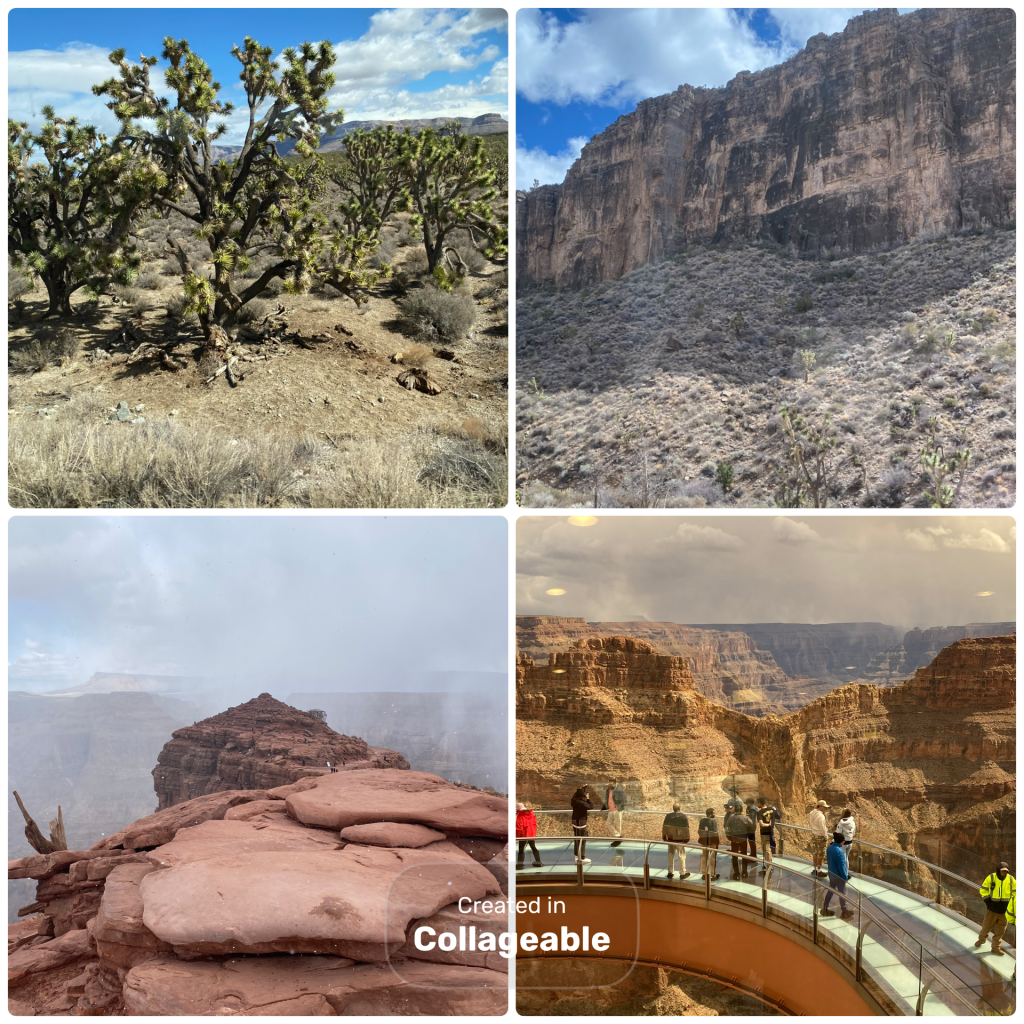
BREAKFAST STARTS AT 7.30 and I had to catch the coach at 7.50. So, there was little time to spare. After I finished my two poached eggs 🥚🥚, with beans, fresh coffee ☕️ and a bowl 🥣 of Granola, I was ready to go. The receptionist said the driver was waiting for me, which was true, but others were still boarding the ride. Whilst on my way, it reminded me of parts of Arizona, which is where I was in March this year, bounding to one of the seven natural wonders of the world, the Grand Canyon. Parts of our journey were arid and sparse in vegetation, as we passed many Joshua Trees.
I CONFESS that the only time I had heard of the Joshua Tree was from an album of that name by U2. Interestingly, when I went to the Grand Canyon it had snowed ❄️, which am I told is rare. I blame our guide. On the journey, he had asked for it to snow in hope rather than true expectation because he hadn’t seen snow for many years. But, I guess what, his hope came true! He was a happy bunny! 🐰 Personally, I was not impressed! 😠 I could have experienced snow back in the U.K. Anyway, notwithstanding this, as would be expected, the Grand Canyon 🗻 was truly amazing! What a sight, and I was honoured to see first-hand a place I had only previously heard of and seen in educational books.
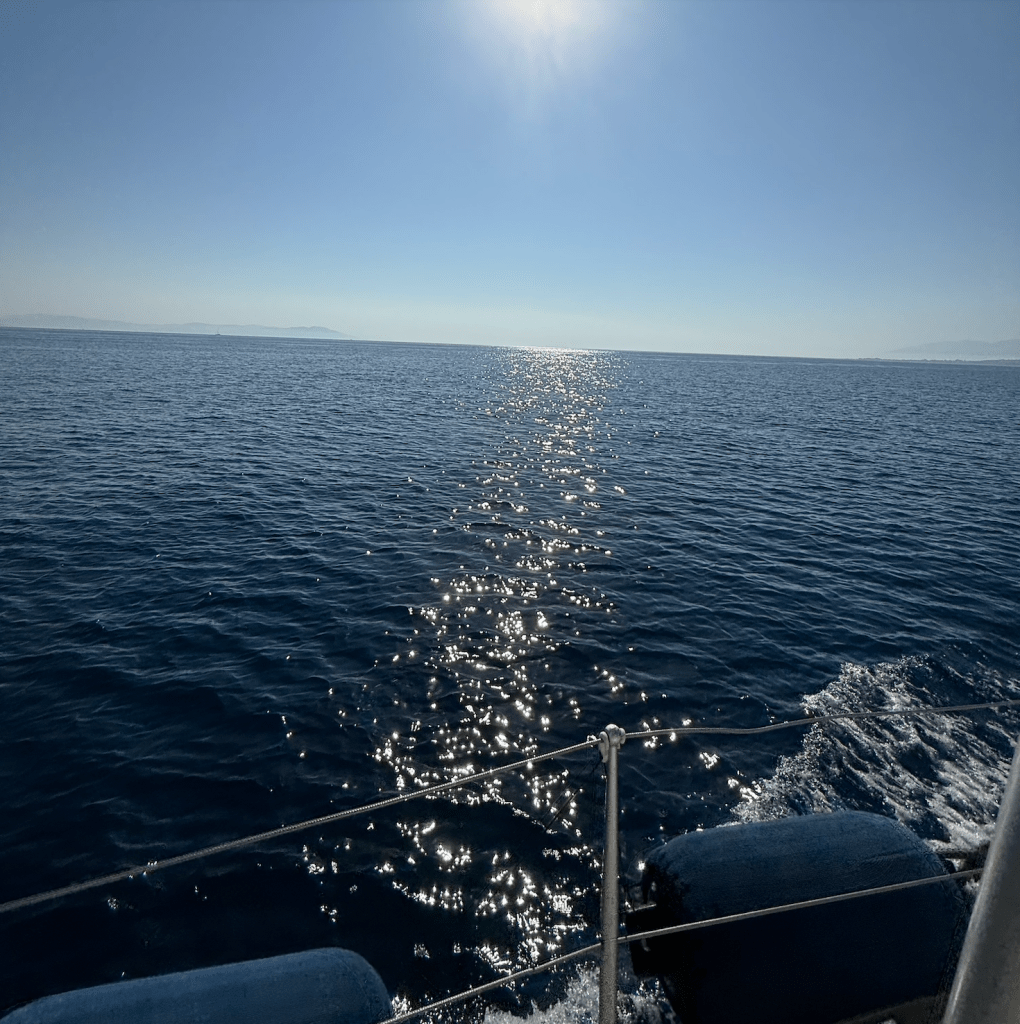
Back to my boat trip. There were about 12 of us on the boat that sailed between the island of Kos and Turkey. It was arguably one of the most peaceful times I have had, similar to solitary moments I have had many times whilst sitting on various white sandy beaches in parts of the Caribbean. But there was something tranquil, calm and still witnessing the various shades of the blue sea that I doubt could be reproduced by any painting artist 🎨, such would be priceless if they could. We ended up, anchoring just off the island Pserimos, which I am reliably informed by more than one source (including friends who live both in the UK and Kos) that in the winter time, yes they do have winter, is inhabited by only 25 to 30 people. Anyway, this day was not much short of what I would describe as perfection. Any problems or concerns one would have about life or, on a less serious note, one’s book finishing on time was washed away and replaced with serenity.
BACKAT THE HOTEL. There was evening entertainment every day. On some nights, there were acts from South Africa who were just truly amazing and were my favourites amongst the others. Then came an association with two people whom I think, and hope, will be friends. Again, for privacy reasons, I shall not mention their real names but shall refer to them as George and Michelle. It was strange how we got together. It was first on the night when one of the singers from South Africa was singing some classic songs, so we all went on the dance floor (I shall let you decide whether my going on the dance floor has the same meaning as my dancing!!!). But how this relates to this day is that we somehow ended up chatting until 1am – not on the dancefloor, I should add – being the early hours of Day Seven. It is hard to put this into words but if one could imagine being on a picturesque Greek island. It’s warm. It is a dark save for the starlights. There are stars brighter than probably anywhere else you know. You have a choice of almost any drink you desire: alcoholic, non alcoholic, cocktail, mocktail etc. 🍷🥂🍸 You name it, you can have it! 🍾 What more can one ask for beyond not wishing for snow in the Grand Canyon in March and having to complete one’s latest book on time?
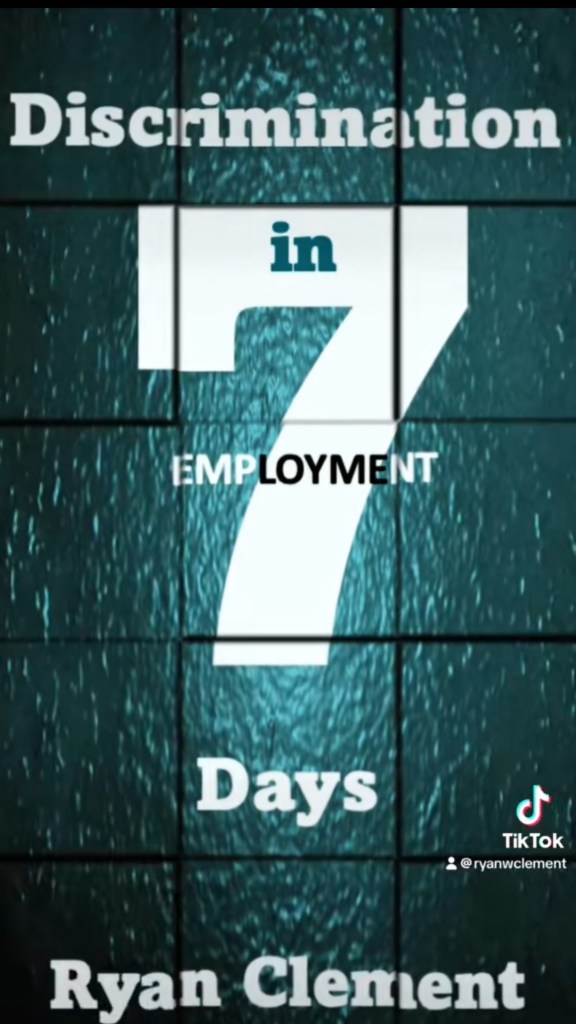
BUT HOW THIS RELATIONSHIP STARTED was that George, like me, was a former quantity surveyor and did his degree in that subject, as too did I (B.Sc.) before I studied law and read for the Bar. But our similarities did not end there. He has written a book, which was on quantity surveying, whereas I have written a book, which is on employment law. But the similarity still did not end there. He’s about to write a novel, whereas as I have written a novel, Like Father, Like Son. Naturally, therefore, he was interested to know that I was writing my current book, Discrimination in Employment in 7 Days!.
SO ON REFLECTION, cumulatively, it probably was the perfect day!
TODAY saw the completion of Day Six, which leaves me with just Day Seven to finish off. Ain’t No Stoppin’ Us Now!I SHALL FINISH THE BOOK by Saturday (Ironically, Day Seven will be completed on Day Seven of a writer’s diary – tempting as it is to say otherwise, it wasn’t by design). If you recall, earlier in the week I was joined by two happy birds who assured me on Day THREE of a writer’s diary that it was going to be a Lovely Day This time I had a lovely view from my room/balcony a of person paragliding, 🪂 who was much braver I, flying by (as one does!) over the Aegean Sea 🌊
SOMETIMES I write a piece and edit it before writing the next. I did that for Days One and Two to ensure that the foundation of the book was solid enough upon which to build and write the rest of the week, brick by brick. Happy with those Days, I then switched to writing the rest of the book, and then I shall edit ALL (including Days One and Two) at the end slowly and meticulously, before the final proofread by my editor. That reminds me, I did a proofreading course many years ago and got a certificate for it. If only I knew where it was. Anyway, although, I don’t particularly enjoy the editing part – I wrote the book. I know and wrote the beginning, the middle and I know how it ends. As George Michael wrote and sang, “I wrote the song, I know it’s wrong.” Well, my parallel is, I wrote the book, I chose the words… Ok! It’s not quite the same (not even close), but, having seen George in concert at Wembley when he was joined on stage by, “Ladies and Gentlemen, Mr. Elton John,” I’m writing a blog that tenuously seeks to make some connection. After all, I wrote blog, I know blog… 😊
THEREFORE, for me, editing projects that I wrote of length can be somewhat boring (Like Father, Like Son is over 100,000 words, which I read over and over and over again during the editing process. By the end I had pulled all my hair out, which has since refused to regrow in fear of being wrenched out again during editing future projects!). But I accept that it is a major and significant part of the writing process. It enables me to capture quickly what’s on my mind before I polish the manuscript but try to keep it as true to my original thoughts as possible (usually the original thoughts are the best because they seek to ‘keep it real!‘) unless there are good causes for doing otherwise.
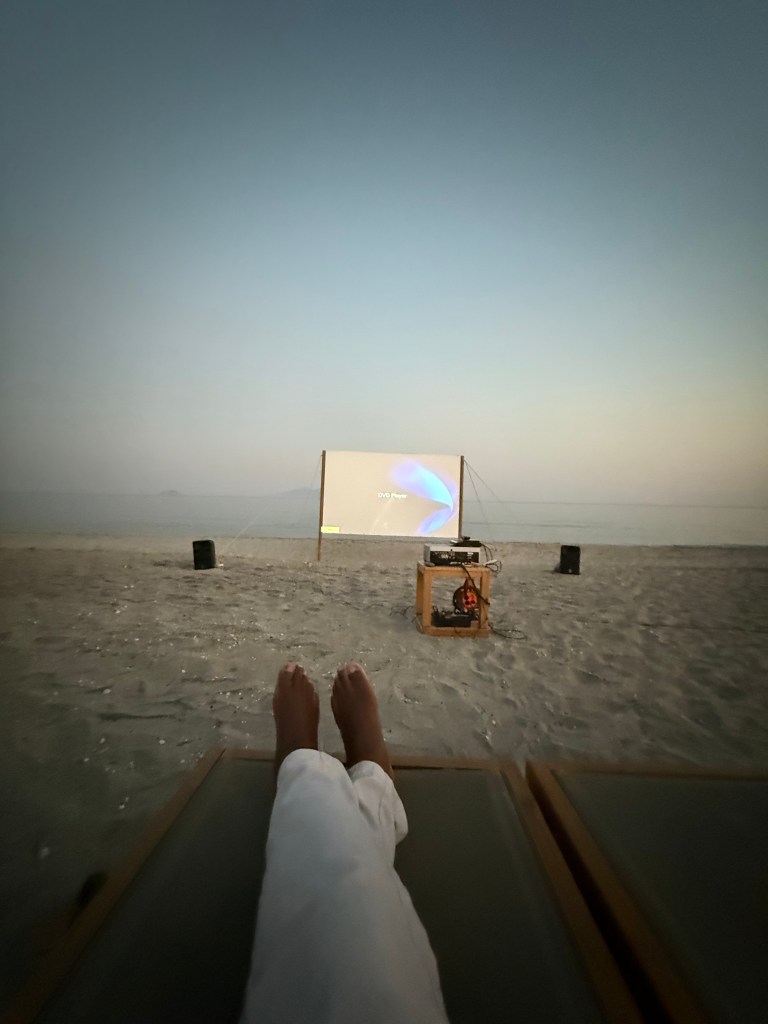
WATCHING THE LION KING on the big screen, lying comfortably under the evening and night stars, and on a sunbed placed strategically on the white sandy beach 🏖️, hearing the waves 🌊 of the sea singing happily in the background, tunefully accompanying the soundtracks of the movie was bliss. A plane ✈️ would frequently fly quietly (or occasionally not so quietly) over on its way to Kos “Ippokratis” International Airport. I believe “Ippokratis,” but I stand to be corrected, is likely to be a translation of the Greek name Ἱπποκράτης,’ which I am informed (I’m hesitant to say reliably informed) is commonly known in English as Hippocrates who, as we all know 🤔, is the father of medicine. However, I shall be happy to be enlightened by the more erudite among us. Notwithstanding this, according to ancestry.com
The name Hippocrates is derived from two ancient Greek words: hippos, meaning horse, and kratos, meaning power or strength. This etymology reflects a connotation of vigor and resilience, characteristics often associated with horses in ancient cultures. Hippocrates is most famously known as the Father of Medicine, due to his profound influence on the practice and ethics of medicine. His contributions extend beyond clinical practices, encompassing the importance of observation, diagnosis, and ethical standards in medical practice. Hippocrates of Kos, who lived around 460-370 BC, is a pivotal figure in ancient medicine.
TODAY, I met a couple, Fred and Ginger (not their real names for privacy reasons) from Liverpool. Lovely couple. I was talking to someone else about football and Fred mentioned that he was a football fan and supported Liverpool FC, where he is a season ticket holder. He sits in the Kop. I told him that I go to Anfield about half-a-dozen times a season and sit in the Main Stand (The Kop is to my right). We exchanged numbers whilst ‘talking football,’ the recent tragic loss of Diogo Jota and André Silva, and where I should park my car on my next trip to Anfield to avoid sitting in my car for nearly two hours simply to exit the city of Liverpool. We plan to meet when I am next at Anfield. Like I said, ideas come from anywhere and everywhere. I thought of a scene, which I noted immediately after I returned to my room. YNWA!🧣
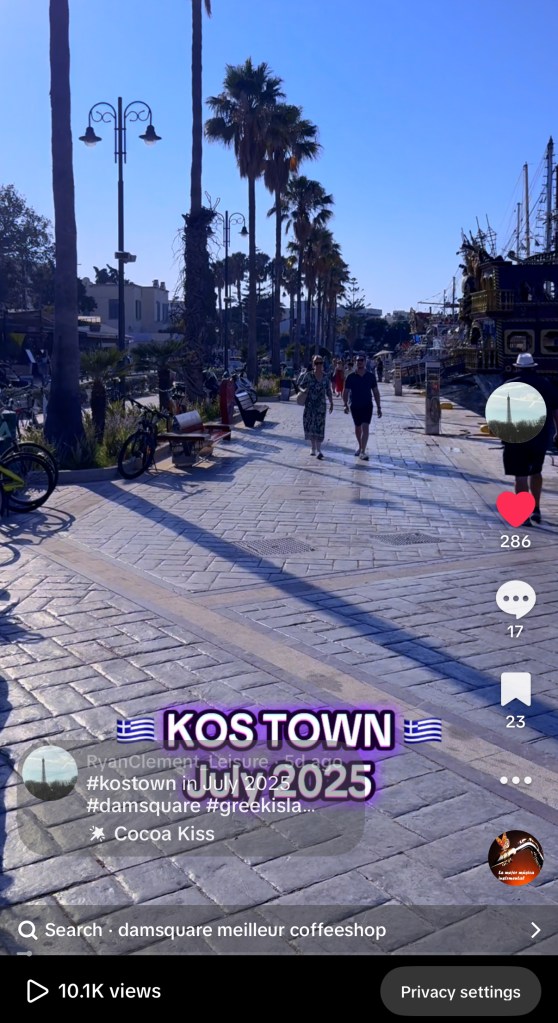
AS FOR KOS TOWN, it was superb and much better than I had realised from the videos I had seen before flying out. To be fair, no video could truly capture its vibrancy and attraction. I left my hotel at 4.30pm (about 1 hour drive) and arrived back at around 11pm.
It was a case of enjoying and observing anything I could use as part of my collection of writer’s tools. There were plenty. I have been to a few places and this place is up there with the best. Las Vegas is still unparalleled for the amount of material, – seeing is believing – but this place has history!
ON THE WRITING FRONT, I am back on schedule. I shall finish Day Six tomorrow before watching Disney’s The Lion King 🎥 on the big screen on the beach 🏖️. Andey, my editor, has already asked for a copy of what I have completed so far (around 80 solid pages), especially after finding a typo in yesterday’s blog, which I corrected immediately “wonder” instead of “wander,” and that’s written by someone with a BA (Hon) in English! 😩 I sense a distinct panic over the amount of editing that may be require to meet the deadline. Oops! But we all have them, right? 🤔 My aim is to finish the first draft of the book before I fly back to the U.K., and gladly hand it over, only to see the final version when it is done, dusted and completed. The aim is to have it ready for publication on 15 August 2025. I then move on to the next. However, before I can continue with my fictional project, I shall be updating Race Relations for the third edition. I hope to have that ready by 30 September 2025, as I have a few big heavy cases to do!
TODAY, I walked onto the balcony to (re)observe the scene before opening my computer to continue with writing Day Six of the book. The sunrise was simply indescribable. Nature and the Natural World at their very best. I then had company 🐦🐤 and we three peacefully enjoyed the beautiful scenery together. ⛰️☀️⛰️. They reassured me that today was going to be a Lovely Day. I relied on their wisdom, as I was sure that they had witnessed this view many times before as I, too, had the pleasure of witnessing in my short time here.
THE WRITING was solid today rather than plentiful. This part was the final hurdle that would be at a slower pace than the remainder. Why so? I wanted to remind myself of the source of some technical information and ended up reading more than was necessary for the piece I wanted to write ✍🏾. I read a couple of judgments that were unrelated to what I was about to pen, or I should say type! 💻
NOTWITHSTANDING this slight but interesting digression, I received a lot of quality material from Caz on neurodiversity. We shall have some good news to announce on that score, so watch this space, so to speak! 👀
TOMORROW, I am off to Kos town. A wander around will undoubtedly be inspirational. It is surprising how much is stored in the subconsciousness for later use. When I wrote Like Father, Like Son many moons ago, I was amazed at how much material would be available in my bank of consciousness transferred over from my secured vault of subconsciousness. Little past matters and incidents of observations that seemed so immaterial at the time became the perfect source of material on which to draw when searching for that realistic, ‘tell or show,’ description that aptly fits the scene. I rest it there!
AS I SAID, today was initially set aside solely for editing. But my legal professional commitments prevented this from happening. So I decided that I would start writing Day Six for around 2 hours, go for breakfast (which I do not normally have when at home) and do some editing on the parts completed for another few hours before chilling by the pool. I am still old fashioned in the sense that I love to read and edit my first and last/final draft versions on hardcopies, using red ink. There is something rewarding in seeing it in print. Editing electronically is convenient, but it’s not the same. Unless you track your editing, there is no evidence of words substituted, phrases rewritten/reworded, or sentences and paragraphs removed in their entirety. It’s not worse, it simply works differently for me.
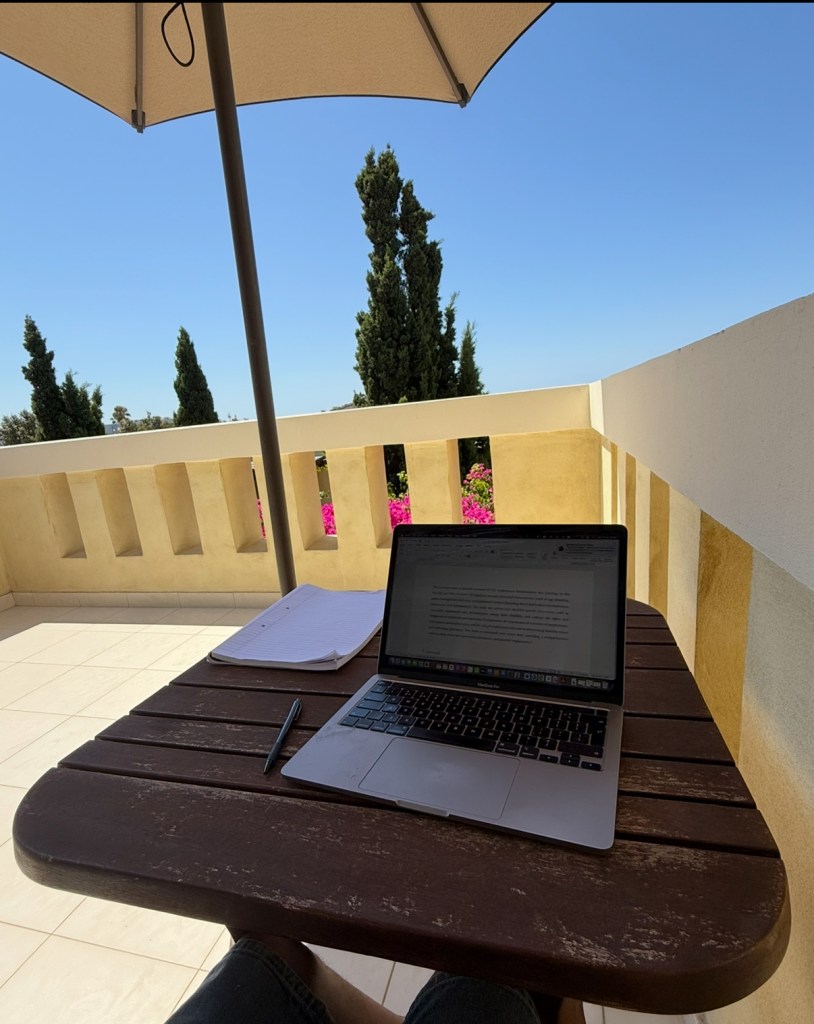
SO, I take my computer out of my bag 💼, ready to work. The balcony is extremely hot 🥵, so I am forced to move the table into the shade.
I GO TO GET MY HARDCOPIES OF DAYS ONE to FIVE, only to discover that they are not there. OMG! I was horrified, as I had left them on my desk at home. I couldn’t believe it! I reframed my thoughts and reprogrammed my mind to think and work differently, which seems easier than it may appear for someone like me. I have an order in my head and usually have to stick to that order without deviation, repetition or hesitation. That is and was the plan.
That’s Life!
OBVIOUSLY, my beautiful idyllic surroundings 🏝️helped cushion the blow. But, it played on my mind for a while that this was not how it was supposed to be. Fortunately, however, that level of negatively failed to weigh the high level of positively of just keep writing. Each sentence written is a sentence closer towards completion!
SO, I ended up writing two pages (of approximately 15 A4 pages left to complete) whilst thinking about the content of the next two or more pages. That’s at least two more positive steps forwards!
IT’S LATE and I have a 6.45am flight ✈️ tomorrow morning from Gatwick South. Although I don’t live too far from the airport, time-wise. I can drive there in 45 minutes. But I wasn’t going to do that drive to get there for 5am, which means leaving home no later than 4.15am, which means waking up at 3.30am and which means just to get a miserly 6 hours sleep, going to bed at 9.30pm the night before 🛌. That wasn’t going to happen, especially as Caz and I were on the phone, bouncing off some good ideas for our next training sessions that left my brain over-hyper-active and unable to switch the Gatwick hotel light off until around 1.40am, leaving me with just 2 hours and 20 minutes before the first of my three alarms went off 🥱. Surprisingly and unusually, I woke up on the first ⏰ Why go to bed so late? After all, I was staying at a hotel in Gatwick and the shuttle bus runs every 20 minutes or so. Well, following on from my chat with Caz, I was buzzing and ‘in the zone,’ which meant I had to capture the moment whilst it was still fresh and raw in my mind, and whilst I was in my ultra creative mood. It sounds like it all went smoothly. It didn’t. The writing did, but my plan did not quite work out. 😩
This book provides a detailed overview of UK employment discrimination law, focusing on the Equality Act 2010. It covers the legislative process, protected characteristics (such as age, disability, gender reassignment, marriage and civil partnership, race, religion or belief, sex and sexual orientation), and prohibited conduct (including direct and indirect discrimination, harassment, and victimisation). The book also delves into disability-specific protections, such as reasonable adjustments and discrimination arising from disability, and outlines the rights and obligations of employers and employees. It emphasises the importance of contracts of employment, both express and implied terms, and the role of employment tribunals in determining disability status and addressing grievances. The book is structured over seven days, providing a comprehensive understanding of the law’s provisions, definitions, and practical implications.
INITIALLY, being around 4 weeks ago, I had planned to finish and edit it whilst on holiday. Holiday was my motive to finish a project I had thought about many years ago. I wrote Day One in early 2024 after court in Leeds and between writing my Closing Submissions. I wrote Days Two and Three early in 2025 in Surrey. I wrote Days Four and Five on weekends in June 2025 in Gloucestershire between kayaking 🛶 in the Cotswold. The plan had been to finish the first draft in early July 2025 before I boarded the plane for the beautiful Greek island of Kos, leaving me one week to edit it in the sunshine. Ample time!🏝️Idyllic⛱️. Unfortunately, I was two days short of completing the week. So, I had to rethink and replan.
I ARRIVED AT MY HOTEL in Kos at around 1.30pm, Greek time, had lunch and then taken to my room. Virginia Woolf spoke of a Room of One’s Own. I immediately fell in love with mine. “I could write, here,” I thought. I have a balcony with the most amazing view(s). Perfect for inspiration, motivation and ideas.
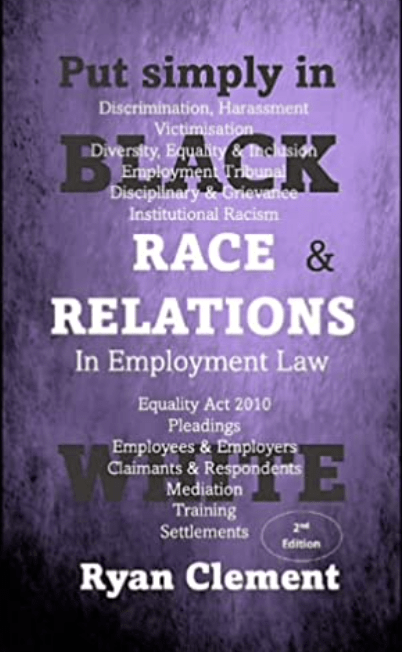
RACE RELATIONS law in the United Kingdom. After many years of practising as an employment law barrister, I have sought to encapsulate some of that experience in print, simply put in black and white, that I hope will be of assistance to many, be it an employee – current and former, employer, worker, claimant, respondent, HR, student and, of course, the intrigued. This book introduces the race relations laws in Britain as pertaining to employment. It does not seek to cover every minutiae of this fascinating and intriguing subject; it would take a much larger book to achieve that aim successfully.
I HAVE BOLDLY attempted to state where I believe it all began. I accept that some, if not many, would disagree with my starting position. But after spending many weeks researching and reading Hansard at my Inns of Court library (the old-fashioned way i.e. without the benefit of an Internet search engine), I reached the conclusion that 12 June 1956 was as good a starting point as any, which I detail in Chapter One (How It All Began). It saddens me somewhat to see that much of what was discussed over 60 years ago with regards to race relations would not look entirely out of place in some discussions taking place today.
THERE IS NO CONSENSUS as to the “correct” place to start when considering the birth of race relations in Britain. Each writer would have their preferable place at which to begin. I have chosen the date and place as 12 June 1956 at the House of Commons when the then Labour Member of Parliament for Eton and Slough, Mr Archibold Fenner Brockway, the son of a Christian missionary, sought leave of the House to introduce his Private Member’s Bill, supported by just eleven other named MPs, among them Mrs Castle and Mr Benn, “to make illegal discrimination to the detriment of any person on the grounds of colour, race and religion in the United Kingdom.”
HOUSE OF COMMONS, First Reading on 12 June 1956, Mr Brockway said:
It is very difficult to estimate opinion on this matter. There are under-currents of feeling, it may even be in the subconscious, which will respond under favourable conditions towards, or retreat under unfavourable conditions from, racial equality. But, Sir, I would say that broadly speaking the British people recognise that identity as human beings is greater than differences of race, colour or religion…I recognise that there must be a limitation of the powers of legislation. Often acts of discrimination are due to prejudice, to ignorance or to irrational repulsion, and those can be removed only by education or experience.
IN TOTAL, Mr Brockway made some 9 attempts to make various forms of race discrimination unlawful; each failing to make its way onto the statute books. However, on 8 November 1965, as predicted by Mr Brockway – albeit not his Bill – on 14 January 1964, the Bill described by Sir Dingle Foot as “a landmark in our legislation” received its Royal Assent and thus became the first race relations legislation in Britain; the Race Relations Act 1965.
ON 17 May 2024, I wrote a blog about Brown v Board of Education, which I had first come across when I read for my Master of Laws (LL.M.) many moons ago.
MY LL.M. was the last of my formal legal studies – my B.A. in English was my last of all. I often wondered what I would have become had it not been for, to cite Mr. Blair, “Education, Eduction, Education.” Obviously, I shall never know. But, what I do know is that I am grateful for the many educational opportunities that came my way that many of us take for granted, which are not universally accessible to all for various reasons. Ironically, I have been a trustee of a school for deaf children, a founding trustee of another for autistic children, been and am a governor of maintained and non-maintained schools. What goes around, comes around.
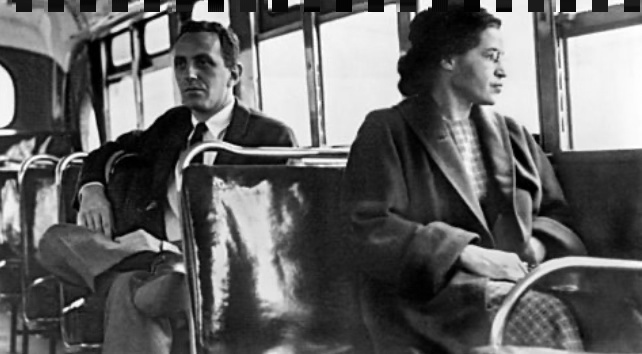
FOR MANY REASONS, the case of Brown v The Board of Education resonates with me. It was a bold move for the family/families to take, especially given the political climate and racial tensions in the U.S. at the material time. I remind you, the decision in Brown was made in 1954 before much of what we know famously about the civil rights movement. To put it in its historical context of what ensued: What happened to Emmett Till was in 1955. Rosa Parks refused to give up her bus seat on 1 December 1955 for a white person and was arrested, which led to the Montgomery Bus Boycott, lasting in excess of a year. “I Have a Dream” by Dr. Martin Luther King Jr., during the March on Washington for Jobs and Freedom, was on 28 August 1963. Following the assassination of President John F. Kennedy on 22 November 1963, President Lyndon B. Johnson signs the Civil Rights Act into law, which JFK had previously proposed. The Civil Rights Act 1964 outlawed discrimination based on race, colour, religion, sex, and national origin. These were undoubtedly tumultuous times across the Atlantic. However, they were times of struggle that led to the shaping of equality laws globally. 🌏🌍🌎 For example, in the U.K., the first major anti-discriminatory law was passed 1 year later, being the Race Relations Act 1965, which was expanded by the Race Relations Act 1968, followed by the Equal Pay Act 1970, the Sex Discrimination Act 1975 and back to an even more expanded Race Relations Act 1976, which remained in force until the current amalgamated Equality Act 2010 came into force on 1 October 2010. It is on the giant shoulders of those who fought for equality in the face of extreme adversity that many of us stand today.
BROWN v BOARD OF EDUCATION was the beginning of a movement and a major turning point in anti-discrimination practices and laws in and beyond the shores of Stateside itself!