NOT SURE if one can ever fully be at peace and, if so, it is likely to be only a temporary state of mind or condition when there is currently such instability in the world around us.
TO ANSWER THE QUESTION, however, after a tough day at work, I relish silence and tranquillity with a book – a biography or novel. I studied 19th century literature and I still like to read novels from that era. The classics. However, I am a great fan of Toni Morrison and Alice Walker, both of whom I have seen and met (with many others, of course!). I saw Toni at the Edinburgh International Book Festival (ironically, I was also in Edinburgh the year she sadly passed away for a wonderful tribute to her) and Alice, I have seen twice; once at the Cheltenham Book Festival and once at the Barbican Centre, London. Unfortunately, every time Dr Maya Angelou visited London, I seemed to be the last person to know and, naturally, too late to secure tickets. ☹️ I digress. Simple answer? Reading 📖
Many people admire the profession I am in. So do I. Not many people get paid for their opinion (giving an oral or a written advice), starting or defending a case (drafting the pleadings), to argue at work (cross-examination), pitch their wits against some of the brightest and the best (opposing Learned Friends) and or to persuade another (a judge and or the court).
But what of the day when you don’t want to argue with anyone? You have a cold, you are suffering from a stinking headache and all you want to do is sleep 😴 because you had a rough night. Answer? You can’t call in before 9am, speak to the boss and say you are going to have a self-certified day off. That’s a No! No! The judge, your opponent, your client, the witnesses are all waiting for you! The show must go on! And, it must go with YOU there! Or, it CANNOT go on without you! It is a fun and rewarding profession, at which you work very hard. Occasionally, you can say, hand on heart, you made a difference to someone’s life that day. The joy is indescribable! I would, therefore, recommend the legal profession and the Bar to any and everyone. 👩⚖️👨🏾⚖️
But, what has all this to do with the title, writer? Very little. Having practised for many years at the Bar, I would love to find a desk somewhere, place down my laptop 💻, play the music to suit the mood at the time and write a novel or two, if not more!✍🏾
If you were going to open up a shop, what would you sell?
If I were to open a shop, I would have to sell books and music. Naturally, because it would be rude not to, I would the read books 📚 throughout the day whilst listening to the music to be sold. That will feel more like a hobby than running a business. Of course, I have chosen the two products to sell that consumers no longer browse the shops for; it’s online. However, there are still some people, like myself, who cherish going to a bookstore (like the one would open) and touch, read a few pages and select their favourite works of literature. And if I don’t make enough money from the business itself, I could always do some, a little, legal work to support it. Idyllic! 📚🎧
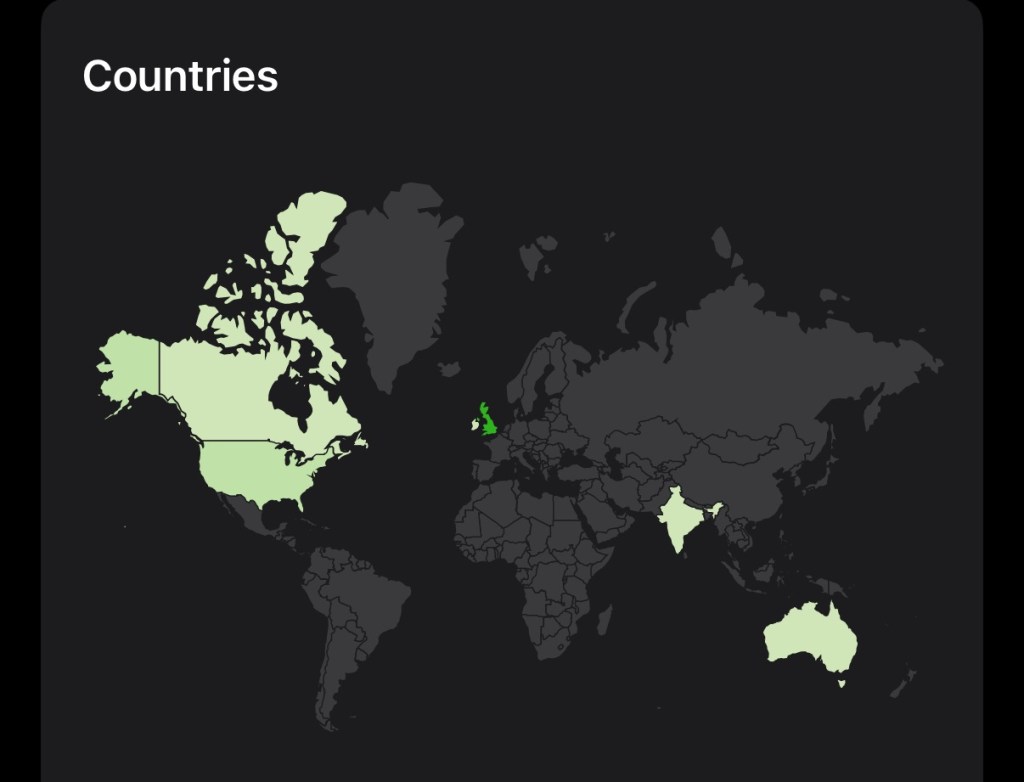
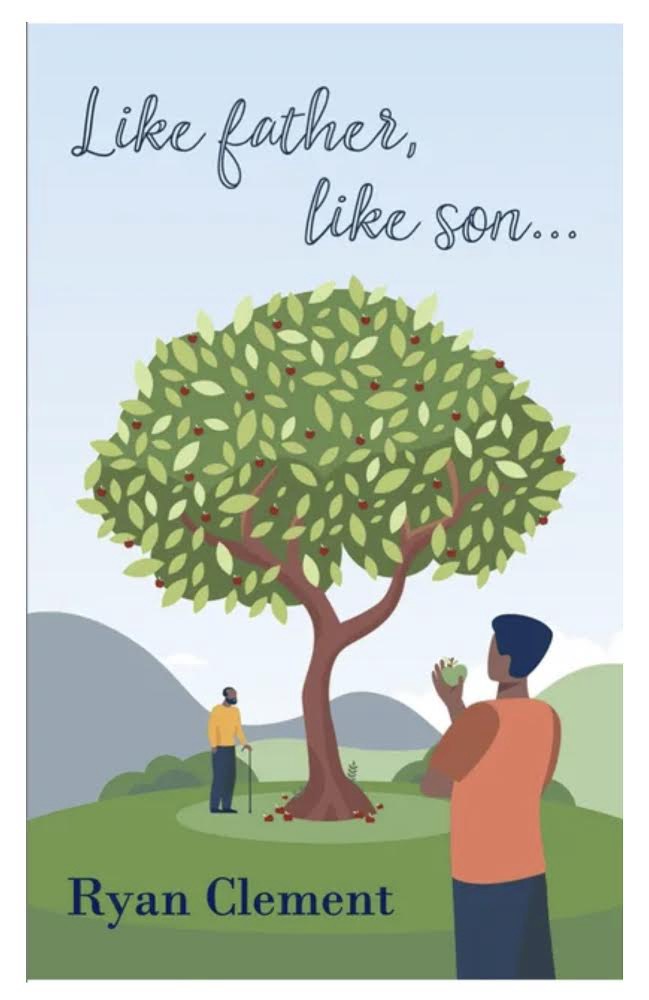
IT HAS BEEN fascinating seeing how far and wide these blogs have reached. 🌍 🗺️ 🌎 I remember when my first book, Like Father, Like Son, was published and I saw it on the Barnes & Noble website or in a library or in a bookshop. What a feeling! Blogs are fun, especially after a long day. I find them relaxing. If you are in any one of these countries, thank you for reading, and please do drop me a line to say hi. 👋🏾
theorist.blog by Ryan Clement
THIS SUMMER was the first time that I had actually written abroad. My editor had travelled to Costa Rica twice 2 years ago (that is twice in one year 2 years ago!) and had met an author who spends a few months a year at the same hotel, finishing off his novels. How wonderful is that! The closest I get to that is writing ✍🏾 my closing submissions in different hotel rooms for court the next day. Not the same but not too dissimilar, either, as there can be an element of creative writing 🖋️ in seeking to persuade a court to accept your take on the facts and the law, which may differ diametrically from one’s Learned Friend’s, the opposing Counsel’s, who, respectfully, is being equally as creative as you.
THERE CAN BE NO DOUBT that when the book is published, I would associate it with these Diary blogs and Kos even though 95% of it was written outside the Greek island’s jurisdiction.
I HAVE THE SAME FEELING whenever I think of Like Father. It was a sunny but crisp Sunday morning, and the idea came to me. I had a beginning and an ending (the middle took care of itself as I trusted the protagonists, Rupert, Patricia, Dexter, Donna and Josephine, to deliver, which they did emphatically!). So I called my soulmate at the time, Sue, who, sadly, has since said goodbye to this world 🌎 (Gone Too Soon! 😔), a victim of C! I TOLD HER THE PLOT as I had it in my head that morning whilst we sat in an ice cream 🍨 parlour on Chiswick High Street in West London. She liked it and therefore I wrote it. She was my first critic. Years later the publisher went bust, so I decided to publish it myself. I remember travelling to Leeds and Amazon in Northamptonshire to deliver copies to be sold. It was fun 🤩 Years later, again, and after I had completed both a creative writing diploma course at Birkbeck College, London, and a BA in English Literature, I decided to do a rewrite of parts of the book. However, I kept it true to the original. I began that journey over what was to be called Hemingway Christmas, which is another story for another day in another blog.
I AM NOW WRITING another novel that begins its setting in the tiny Caribbean island 🏝️ of Grenada 🇬🇩 In my view, there are too few stories set in the Caribbean. So I intend to play my small part.
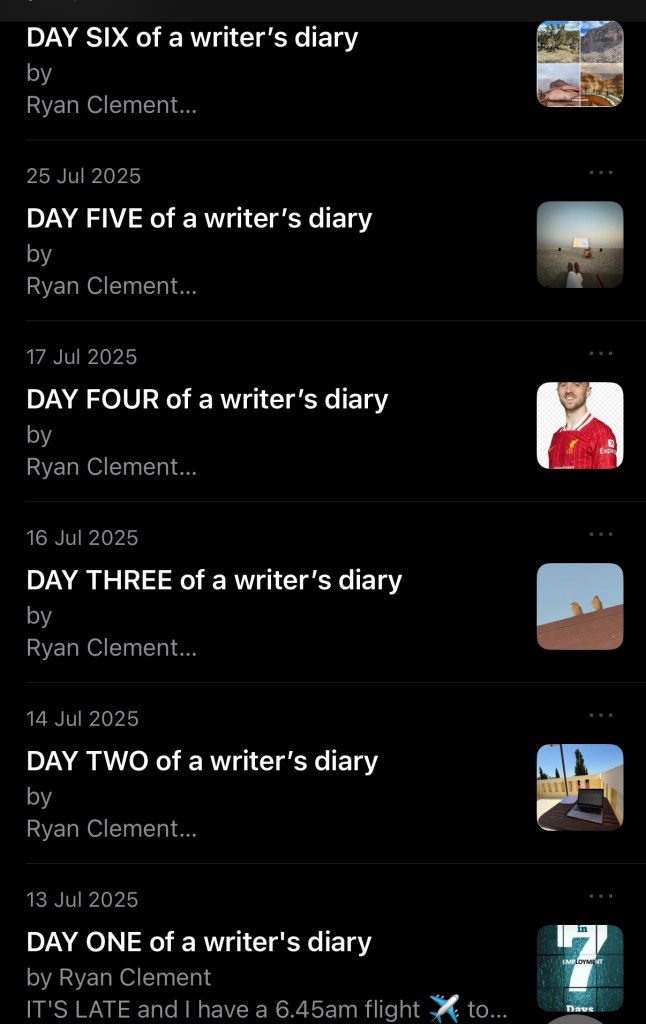
FOR NEWCOMERS, the diary entries capture my daily creativity and the challenges I faced whilst completing my book on Employment Discrimination Law. It details my writing process ✍🏾, the book’s content, and my experience whilst working and holidaying on the beautiful Greek 🇬🇷 island of 🏝️ Kos 🏖️.
Creative process challenges: Despite my plans to get sufficient rest before an early flight ✈️ from Gatwick before Day ONE of a writer’s diary, I stayed up late due to an energising phone conversation with Caz about our future training plans, resulting in limited sleep but productive writing nevertheless.
Book content and focus: The book, titled, “Discrimination in Employment in 7 Days,” provides a detailed overview of the Equality Act 2010, covering protected characteristics, types of discrimination, employer and employee rights, and employment tribunals’ role and process, structured over seven days for a comprehensive understanding of this area.
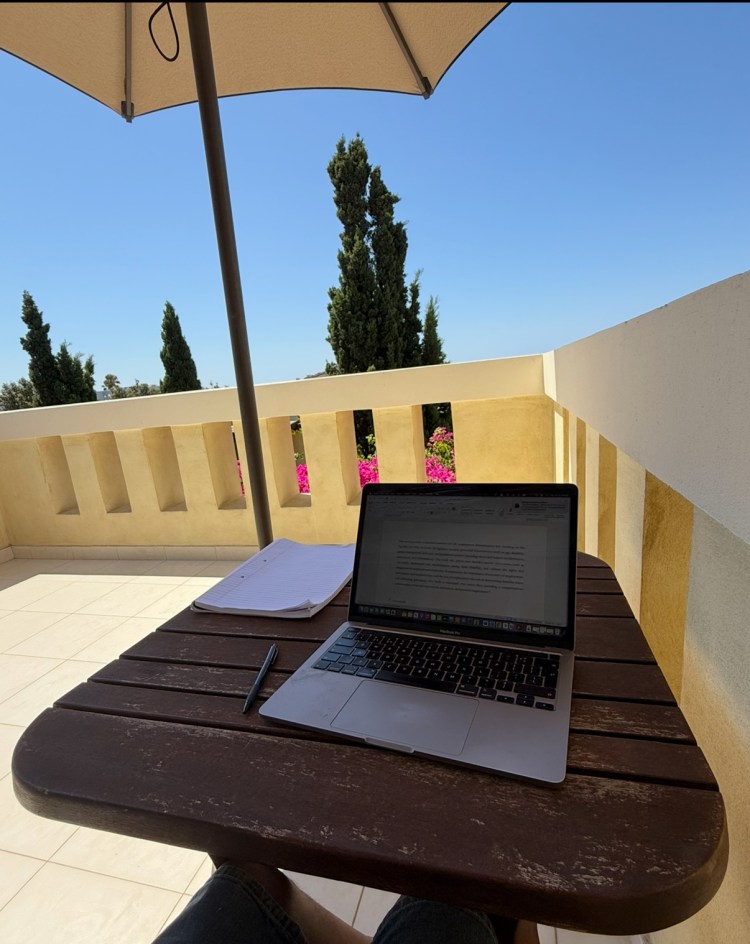
Writing timeline and environment: Initially, I had planned to complete the draft last year, 2024, but had to adjust my schedule due to other professional commitments. Therefore, my writing took place in various locations, including Yorkshire, Surrey, Gloucestershire and, finally, Kos, where I found an inspiring room with a balcony and views conducive to creativity.💡
“Finally, it has been a pleasure having your company over the past seven days. Thank you!”
NEVER HAVE sixteen words felt so good as I write the final two sentences, the final paragraph of the book and take a gentle but small sip of my Daiquiri from the clear cocktail glass. My drink had been calling me since I began the final page. Its calling became louder and louder with each passing word. The sweet aroma of rum, accompanied by a thin slice of lime, became more penetrating with each passing paragraph.
TODAY, WAS BOAT TRIP DAY. However, I still managed to write the opening paragraph to Day Seven. So, technically, I managed to keep the momentum going; One small step on Day Seven of the book, One giant step towards its completion.
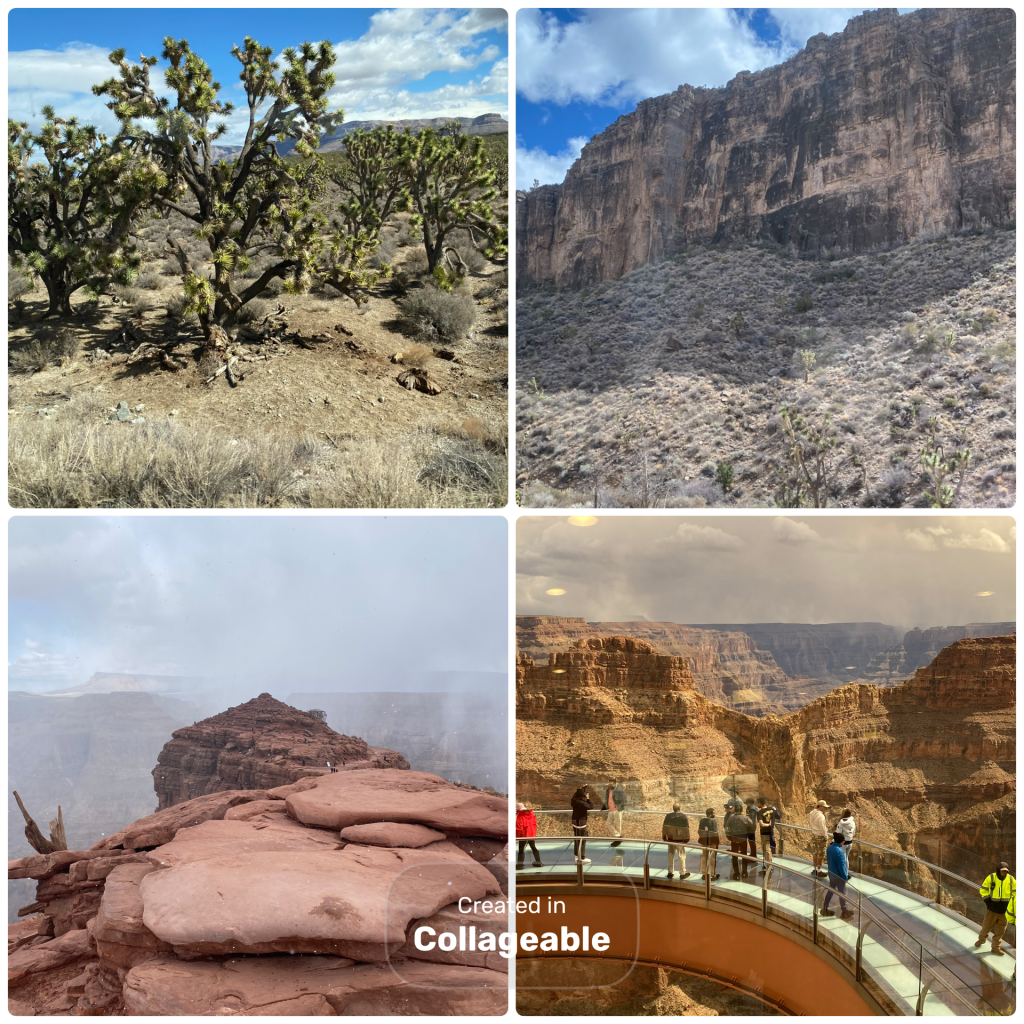
BREAKFAST STARTS AT 7.30 and I had to catch the coach at 7.50. So, there was little time to spare. After I finished my two poached eggs 🥚🥚, with beans, fresh coffee ☕️ and a bowl 🥣 of Granola, I was ready to go. The receptionist said the driver was waiting for me, which was true, but others were still boarding the ride. Whilst on my way, it reminded me of parts of Arizona, which is where I was in March this year, bounding to one of the seven natural wonders of the world, the Grand Canyon. Parts of our journey were arid and sparse in vegetation, as we passed many Joshua Trees.
I CONFESS that the only time I had heard of the Joshua Tree was from an album of that name by U2. Interestingly, when I went to the Grand Canyon it had snowed ❄️, which am I told is rare. I blame our guide. On the journey, he had asked for it to snow in hope rather than true expectation because he hadn’t seen snow for many years. But, I guess what, his hope came true! He was a happy bunny! 🐰 Personally, I was not impressed! 😠 I could have experienced snow back in the U.K. Anyway, notwithstanding this, as would be expected, the Grand Canyon 🗻 was truly amazing! What a sight, and I was honoured to see first-hand a place I had only previously heard of and seen in educational books.
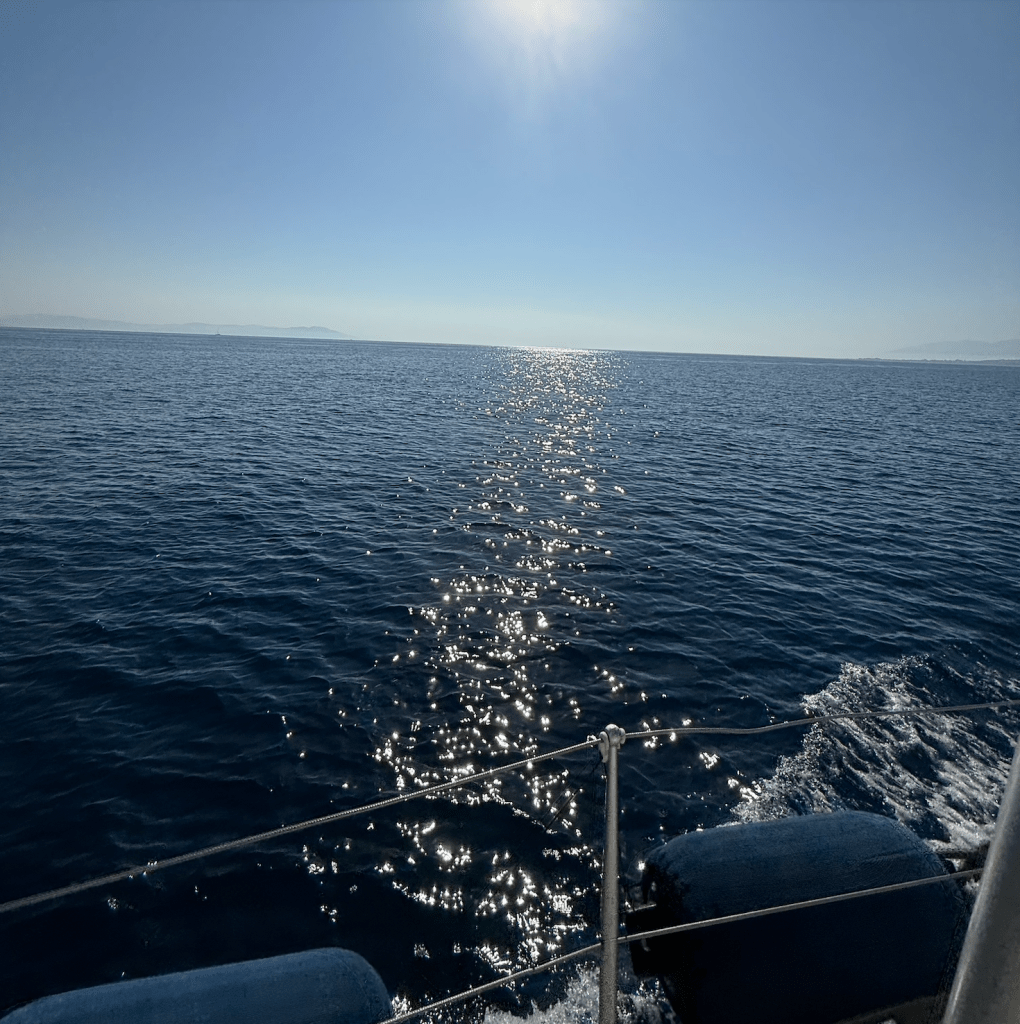
Back to my boat trip. There were about 12 of us on the boat that sailed between the island of Kos and Turkey. It was arguably one of the most peaceful times I have had, similar to solitary moments I have had many times whilst sitting on various white sandy beaches in parts of the Caribbean. But there was something tranquil, calm and still witnessing the various shades of the blue sea that I doubt could be reproduced by any painting artist 🎨, such would be priceless if they could. We ended up, anchoring just off the island Pserimos, which I am reliably informed by more than one source (including friends who live both in the UK and Kos) that in the winter time, yes they do have winter, is inhabited by only 25 to 30 people. Anyway, this day was not much short of what I would describe as perfection. Any problems or concerns one would have about life or, on a less serious note, one’s book finishing on time was washed away and replaced with serenity.
BACKAT THE HOTEL. There was evening entertainment every day. On some nights, there were acts from South Africa who were just truly amazing and were my favourites amongst the others. Then came an association with two people whom I think, and hope, will be friends. Again, for privacy reasons, I shall not mention their real names but shall refer to them as George and Michelle. It was strange how we got together. It was first on the night when one of the singers from South Africa was singing some classic songs, so we all went on the dance floor (I shall let you decide whether my going on the dance floor has the same meaning as my dancing!!!). But how this relates to this day is that we somehow ended up chatting until 1am – not on the dancefloor, I should add – being the early hours of Day Seven. It is hard to put this into words but if one could imagine being on a picturesque Greek island. It’s warm. It is a dark save for the starlights. There are stars brighter than probably anywhere else you know. You have a choice of almost any drink you desire: alcoholic, non alcoholic, cocktail, mocktail etc. 🍷🥂🍸 You name it, you can have it! 🍾 What more can one ask for beyond not wishing for snow in the Grand Canyon in March and having to complete one’s latest book on time?
BUT HOW THIS RELATIONSHIP STARTED was that George, like me, was a former quantity surveyor and did his degree in that subject, as too did I (B.Sc.) before I studied law and read for the Bar. But our similarities did not end there. He has written a book, which was on quantity surveying, whereas I have written a book, which is on employment law. But the similarity still did not end there. He’s about to write a novel, whereas as I have written a novel, Like Father, Like Son. Naturally, therefore, he was interested to know that I was writing my current book, Discrimination in Employment in 7 Days!.
SO ON REFLECTION, cumulatively, it probably was the perfect day!
TODAY saw the completion of Day Six, which leaves me with just Day Seven to finish off. Ain’t No Stoppin’ Us Now!I SHALL FINISH THE BOOK by Saturday (Ironically, Day Seven will be completed on Day Seven of a writer’s diary – tempting as it is to say otherwise, it wasn’t by design). If you recall, earlier in the week I was joined by two happy birds who assured me on Day THREE of a writer’s diary that it was going to be a Lovely Day This time I had a lovely view from my room/balcony a of person paragliding, 🪂 who was much braver I, flying by (as one does!) over the Aegean Sea 🌊
SOMETIMES I write a piece and edit it before writing the next. I did that for Days One and Two to ensure that the foundation of the book was solid enough upon which to build and write the rest of the week, brick by brick. Happy with those Days, I then switched to writing the rest of the book, and then I shall edit ALL (including Days One and Two) at the end slowly and meticulously, before the final proofread by my editor. That reminds me, I did a proofreading course many years ago and got a certificate for it. If only I knew where it was. Anyway, although, I don’t particularly enjoy the editing part – I wrote the book. I know and wrote the beginning, the middle and I know how it ends. As George Michael wrote and sang, “I wrote the song, I know it’s wrong.” Well, my parallel is, I wrote the book, I chose the words… Ok! It’s not quite the same (not even close), but, having seen George in concert at Wembley when he was joined on stage by, “Ladies and Gentlemen, Mr. Elton John,” I’m writing a blog that tenuously seeks to make some connection. After all, I wrote blog, I know blog… 😊
THEREFORE, for me, editing projects that I wrote of length can be somewhat boring (Like Father, Like Son is over 100,000 words, which I read over and over and over again during the editing process. By the end I had pulled all my hair out, which has since refused to regrow in fear of being wrenched out again during editing future projects!). But I accept that it is a major and significant part of the writing process. It enables me to capture quickly what’s on my mind before I polish the manuscript but try to keep it as true to my original thoughts as possible (usually the original thoughts are the best because they seek to ‘keep it real!‘) unless there are good causes for doing otherwise.
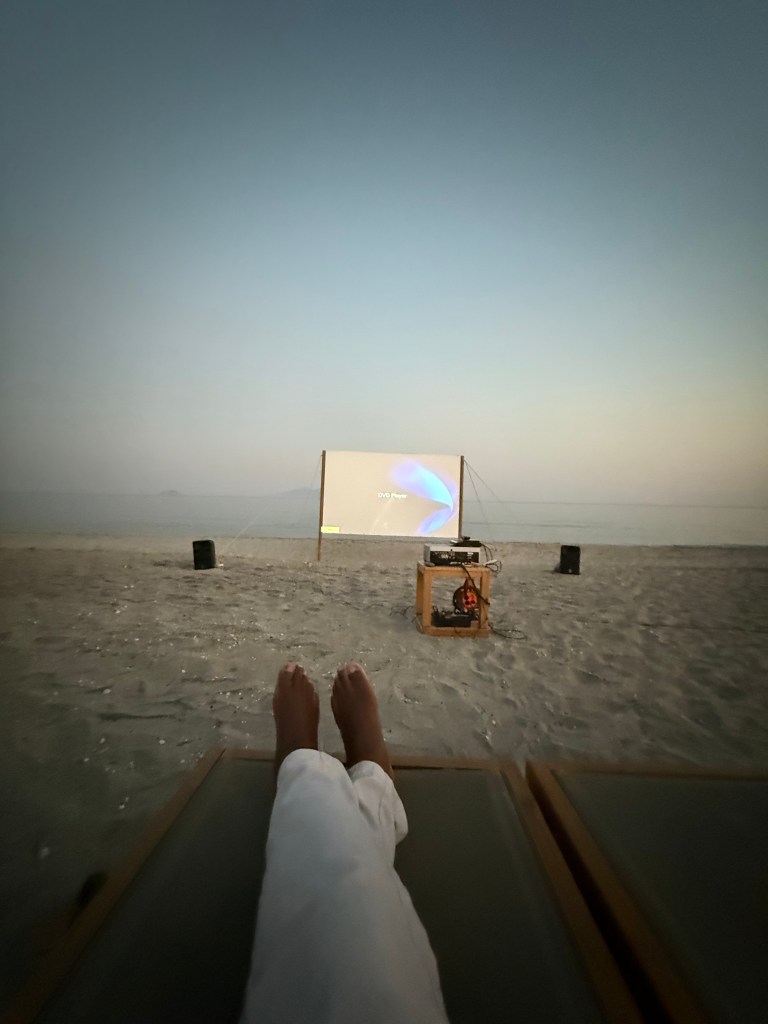
WATCHING THE LION KING on the big screen, lying comfortably under the evening and night stars, and on a sunbed placed strategically on the white sandy beach 🏖️, hearing the waves 🌊 of the sea singing happily in the background, tunefully accompanying the soundtracks of the movie was bliss. A plane ✈️ would frequently fly quietly (or occasionally not so quietly) over on its way to Kos “Ippokratis” International Airport. I believe “Ippokratis,” but I stand to be corrected, is likely to be a translation of the Greek name Ἱπποκράτης,’ which I am informed (I’m hesitant to say reliably informed) is commonly known in English as Hippocrates who, as we all know 🤔, is the father of medicine. However, I shall be happy to be enlightened by the more erudite among us. Notwithstanding this, according to ancestry.com
The name Hippocrates is derived from two ancient Greek words: hippos, meaning horse, and kratos, meaning power or strength. This etymology reflects a connotation of vigor and resilience, characteristics often associated with horses in ancient cultures. Hippocrates is most famously known as the Father of Medicine, due to his profound influence on the practice and ethics of medicine. His contributions extend beyond clinical practices, encompassing the importance of observation, diagnosis, and ethical standards in medical practice. Hippocrates of Kos, who lived around 460-370 BC, is a pivotal figure in ancient medicine.
TODAY, I met a couple, Fred and Ginger (not their real names for privacy reasons) from Liverpool. Lovely couple. I was talking to someone else about football and Fred mentioned that he was a football fan and supported Liverpool FC, where he is a season ticket holder. He sits in the Kop. I told him that I go to Anfield about half-a-dozen times a season and sit in the Main Stand (The Kop is to my right). We exchanged numbers whilst ‘talking football,’ the recent tragic loss of Diogo Jota and André Silva, and where I should park my car on my next trip to Anfield to avoid sitting in my car for nearly two hours simply to exit the city of Liverpool. We plan to meet when I am next at Anfield. Like I said, ideas come from anywhere and everywhere. I thought of a scene, which I noted immediately after I returned to my room. YNWA!🧣
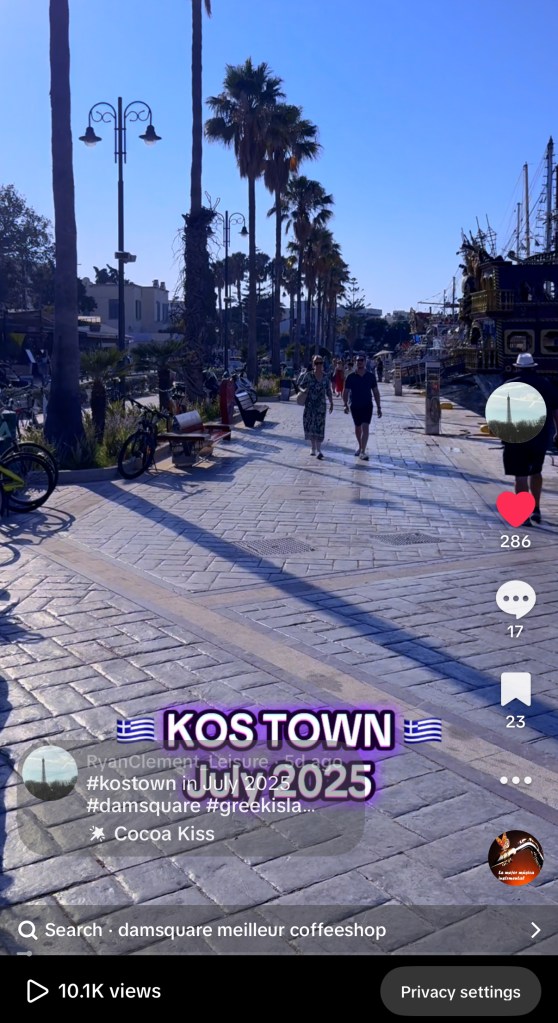
AS FOR KOS TOWN, it was superb and much better than I had realised from the videos I had seen before flying out. To be fair, no video could truly capture its vibrancy and attraction. I left my hotel at 4.30pm (about 1 hour drive) and arrived back at around 11pm.
It was a case of enjoying and observing anything I could use as part of my collection of writer’s tools. There were plenty. I have been to a few places and this place is up there with the best. Las Vegas is still unparalleled for the amount of material, – seeing is believing – but this place has history!
ON THE WRITING FRONT, I am back on schedule. I shall finish Day Six tomorrow before watching Disney’s The Lion King 🎥 on the big screen on the beach 🏖️. Andey, my editor, has already asked for a copy of what I have completed so far (around 80 solid pages), especially after finding a typo in yesterday’s blog, which I corrected immediately “wonder” instead of “wander,” and that’s written by someone with a BA (Hon) in English! 😩 I sense a distinct panic over the amount of editing that may be require to meet the deadline. Oops! But we all have them, right? 🤔 My aim is to finish the first draft of the book before I fly back to the U.K., and gladly hand it over, only to see the final version when it is done, dusted and completed. The aim is to have it ready for publication on 15 August 2025. I then move on to the next. However, before I can continue with my fictional project, I shall be updating Race Relations for the third edition. I hope to have that ready by 30 September 2025, as I have a few big heavy cases to do!




 Ryan Clement