“Then he took the cup, and when he had given thanks, he gave it to them, saying, ‘Drink from it, all of you, for this is my blood of the covenant…'” Matthew 26:27-28
MANY MANY YEARS AGO, I was in Rome over the Easter period. We arrived on Good Friday. Our hotel was about 20 minutes walk from the Colosseum – I shall add pictures in an updated version of this blog because I am referring to a pre-digital era, which means I shall have to scan them in! 📸 On the evening of our arrival, we saw a vast crowd had gathered near the ancient amphitheatre. Upon close inspection and making our way through the crowds the best we could, we were able to see the subject of the crowd’s attention. It was none other than His Holiness, Pope John Paul II.
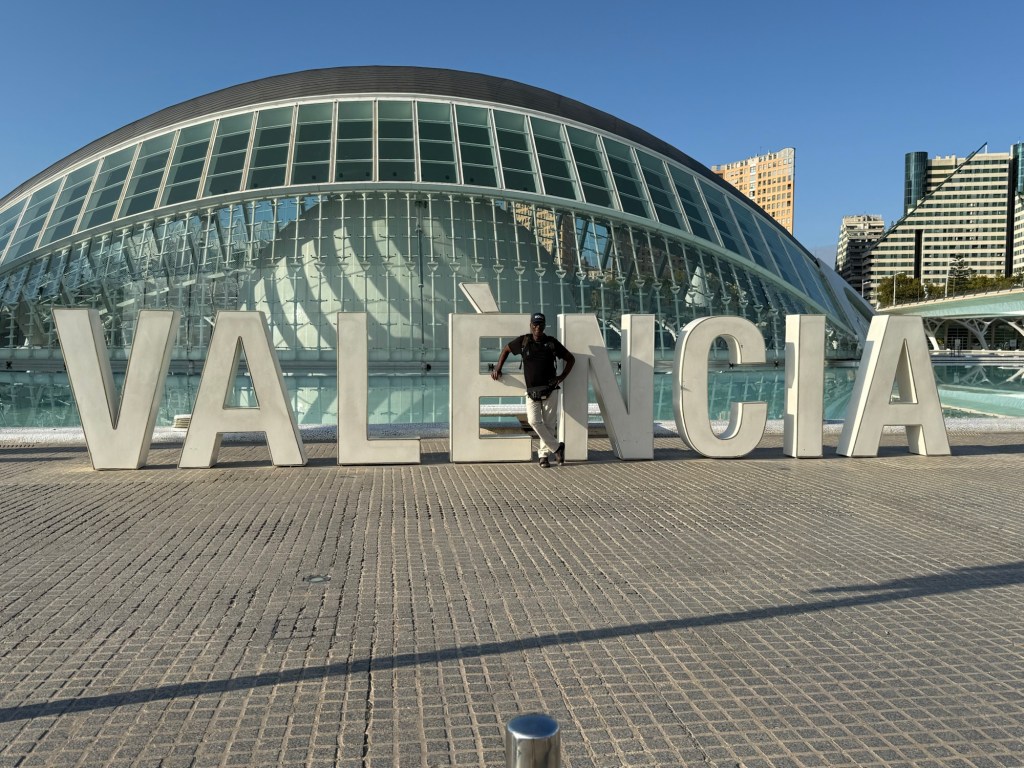
DESPITE the many subjects I write about, I leave it to those more learned than I to write about politics and religion. Hence, this blog gives no opinion on the subject matter, other than to say, similar to how a younger I had felt seeing such a world famous figure whom, until then, I had only ever seen on my television many times and whose image decorated the windows of almost every shop I had seen in Rome, it was a moving experience sitting in Valencia Cathedral on 4 October 2025, quietly sharing a space with a chalice that is claimed to be the true Holy Grail, although its historical authenticity remains debated by scholars.
IT’S OFFICIAL! Coexistence of the old and the new can and does work. I already knew that, of course, but needed a title for the short series of blogs.
I HAVE HAD THE PLEASURE of visiting Rome many years ago but, unlike good friends, A. and S., not Athens where they visited just last month. That’s a must for me.
I RETURNED from Valencia, Spain 🇪🇸, late last night (Tuesday, 7 October). I have nothing but praise for this beautiful city about which I shall be writing ✍🏾 over the next few blogs – not quite as I did about Kos.
I LANDED 🛬 in Valencia early Saturday morning in around 26 degrees. After having a Sangria 🍷at the hotel bar at 12:15, I headed for the beach 🏖️ by which time the temperature had risen significantly. It was perfect 👌🏾
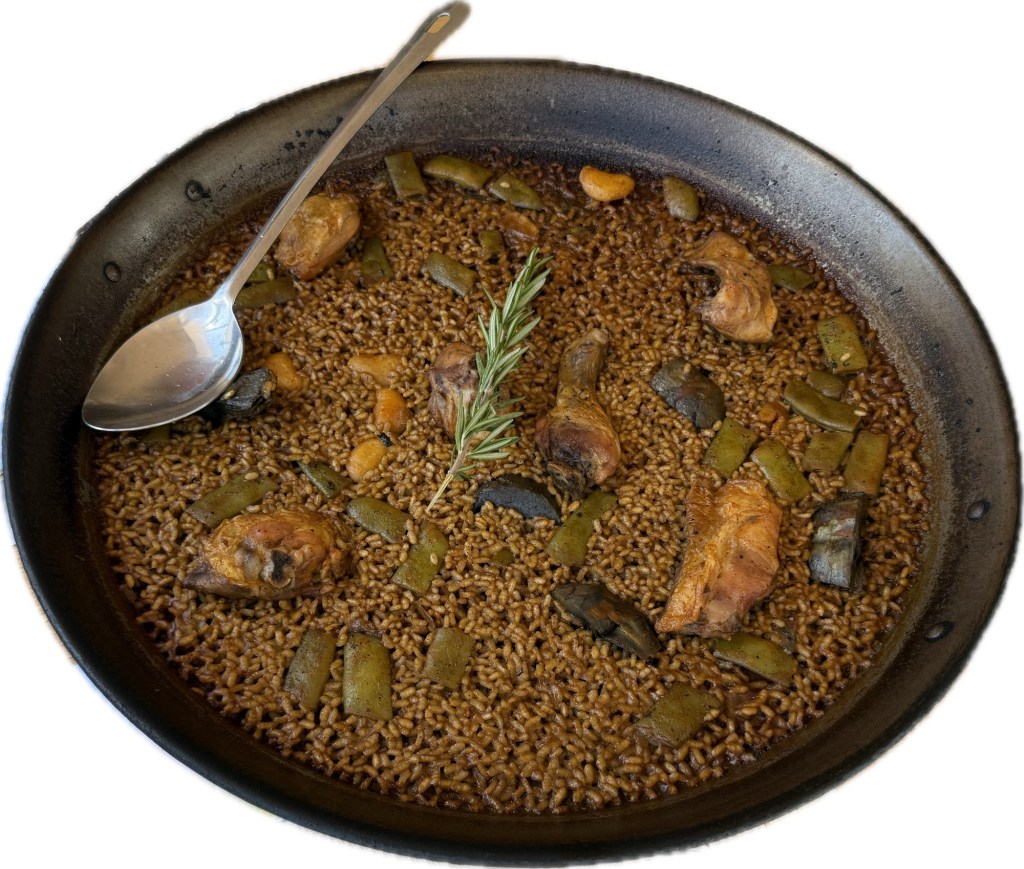
VALENCIA is the birthplace of Paella, pronounced, ‘pah-AY-ya,’ and not how I used to pronounce it, ‘py-EL-a.’ 🤔
AS A FORMER SURVEYOR, I appreciate old and new architecture probably more than I might otherwise have done had I not had those professional roots. The coexistence of the old and new buildings and architecture in Valencia is in abundance, and it just works! They complement each other seamlessly and magnificently! Oh, what a joy to see! Without any hesitation, I compliment the complements. 🤗🤗🤗
TOMORROW, I shall write about a very special chalice that has its home in Valencia and which I had the pleasure of being within metres of and witness. See you then! 👋🏾
NOT EVERYONE buys into diversity and inclusion, and not everyone is sold on it either. There is much discussion about its or their benefits in the current political climate; I shall rest that there. It may not be everyone’s cup of tea 🫖 but some may ask, is it time to wake up 😴 and smell the coffee??? 🤔☕️
THERE ARE TWO WAYS to approach this question. One is there has never been music, so it never existed, in which case you don’t know what you don’t know, so you can’t miss it or conceive what it would be like without something you can’t conceive in the first place. It is like folks of the 18th century being asked what life would be like without the World Wide Web? 🤔 You would have drawn a blank! 😳 Regarding music, I can’t even say whether or not there would have been dancing because you don’t necessarily need music to dance – and, respectfully, I have witnessed some dancing (used loosely) and some are dancing to the same tune as others, but that’s another story and another point! 💃🏾🕺🏻
NOW, two, the question is approached from the angle of having listened to music and now not, then that IS a different story. I can only speak for myself. I have had the pleasure of seeing many many bands, groups and artists live; from The Jacksons (all the brothers excluding Jermaine) to Michael Jackson (solo tours) to Chic to Sister Sledge to George Michael (guest appearance by Elton John) to Whitney Houston to Earth, Wind & Fire to Garth Brooks (Vegas) to Donny Osmond (Vegas) to U2 to Shalamar (twice) (supported by Jermaine Stewart) to Kool and the Gang to Gladys Knight and the Pips to Randy Crawford to the Crusaders to Level 42 to the Brothers Johnson to Toni Braxton and many more that I can’t even remember, and some that many may or may not have even heard of such as Central Line, Imagination, Linx (supported by Junior Giscombe) and Loose Ends etc.
Mark King and Louis Johnson
I was in a band in my late teens and early 20s, and used to play my favourite instrument, the bass guitar – I owned a Fender Jazz. But after seeing Louis from the Brothers Johnson and Mark from Level 42 play live, I knew my talent at playing my bass was as bad as I thought 😩 and made the easy decision to stop offending listeners’ ears before my playing (also used loosely) become a criminal offence, which would have prevented me from becoming a barrister!!! 👨🏾⚖️
PUT SIMPLY, having bitten the apple 🍎 of music, I would have struggled to have to live without it!
ON 15 SEPTEMBER 2025, the UK Government announced:
“Hillsborough Law to ensure truth never concealed by state again.”
Landmark legislation a legacy for the 97 lost at Hillsborough and a tribute to the families that have fought for change.
On 15 APRIL 2023 I wrote a blog about the Hillsborough Disaster. It was painful, reliving that day to put into print. I made a video, which was even harder as I relived footage of what had occurred. I am a Liverpool fan. I go to Anfield to watch my team. It’s sport. It’s entertainment. It ought to be no more than just those. On 15 April 1989, it was! 😢
The youngest victim of the Hillsborough Disaster was aged just 10, which would have been around the same age that I was visiting these grounds. My mother put her trust in my best friend’s dad to keep me safe and he in turn, I guess, put his trust in the appropriate authorities to keep us all safe. Thirdly, I am a Liverpool fan and have been since the age of first visiting these grounds. Lastly, as my best friend once did with his son, I now take my son to Anfield to watch the home team whom he also supports.
Favorite types of foods are those that are spicy and or well-seasoned. Coming from a Caribbean home, my food was always seasoned with various spices. This was the norm. Also, I love food from the Indian subcontinent, and frequent restaurants for the same. Lastly, over the past year or so, I have discovered Greek food, which is not a spice-based food as those from the above but equally delicious 😋 Oh, just remembered, I love Mexican food, too, which is also spicy 🌶️
IN ‘A writer’s diary for this summer,’ I wrote, “THERE CAN BE NO DOUBT that when the book is published, I would associate it with these Diary blogs and Kos even though 95% of it was written outside the Greek island’s jurisdiction…I HAVE THE SAME FEELING whenever I think of Like Father. It was a sunny but crisp Sunday morning, and the idea came to me. I had a beginning and an ending (the middle took care of itself as I trusted the protagonists, Rupert, Patricia, Dexter, Donna and Josephine, to deliver, which they did emphatically!). So I called my soulmate at the time, Sue, who, sadly, has since said goodbye to this world 🌎 (Gone Too Soon! 😔), a victim of C! I TOLD HER THE PLOT as I had it in my head that morning whilst we sat in an ice cream 🍨 parlour on Chiswick High Street in West London. She liked it and therefore I wrote it. She was my first critic. Years later the publisher went bust, so I decided to publish it myself.”
ON DAY FIVE of a writer’s diary I wrote, referring to Like Father, Like Son, “THEREFORE, for me, editing projects that I wrote of length can be somewhat boring (Like Father, Like Son is over 100,000 words, which I read over and over and over again during the editing process. By the end I had pulled all my hair out, which has since refused to regrow in fear of being wrenched out again during editing future projects!). But I accept that it is a major and significant part of the writing process. It enables me to capture quickly what’s on my mind before I polish the manuscript but try to keep it as true to my original thoughts as possible (usually the original thoughts are the best because they seek to ‘keep it real!‘) unless there are good causes for doing otherwise.” I recall precisely where I was in Kos when I wrote that extract, which now seems a long long time ago.
WELL, this is a recording of the opening, which starts with a reflection of what had taken place in the book itself. It involves Rupert and Dexter. As mentioned above, in ‘A writer’s diary for this summer,’ I wrote how the book was born. Although the characters in the book are purely fictional, I wanted a ‘son‘ and a ‘father‘ to speak on the recording to reflect the, “Like Father, Like Son” elements of the book’s title. So, I managed to get my son to stop playing his PS5 for a nanosecond to record the opening, “Like Father, Like Son;” Caz sent me her recording of, “by Ryan Clement;” my editor, Andey, narrates the ending of the book, which was recorded for a promo over 4 years ago; and I end the piece by saying “Like Father, Like Son,” to conclude; both my son and I begin and end with, “Like Father, Like Son;” albeit the son speaks before the father, of course, but let’s not be too pedantic and we shall overlook that order 😳 and applaud creativity 👏🏾👏🏾👏🏾 There was a method in my thinking, a theory behind my thoughts! 🤔 Enjoy!
He’s right. It was us, not them. We did it. We are solely to blame. We had it too good for too long, so we meddled with our Everyday and Unremarkable in exchange for the Different that Disharmony and Irregular bring. “Never truer words spoken,” I reply. “Never truer words!”RUPERT
YESTERDAY, I wrote about the need for organisations to have a Menopause Policy.
There is a lot of good information out there to form the basis of an organisation’s Menopause Policy. And this policy is a must! To still not have one is a serious omission or error of judgment.
I WONDER if it was advocated that an Andropause Policy was needed in every workplace whether it would take much convincing to adopt? 🤔 Just putting it out there! 😳
A VERY GOOD FRIEND OF MINE with whom I shall soon be collaborating on a couple of interesting projects – 👀 so watch this space 👀– reminds us, rightly, to know our work policies. I concur. Before signing an employment contract, employees are often asked to confirm they have read and understood the organisation’s policies. Some may be contractual, and some may not. Interestingly, however, knowing the policies go both ways. Both the employer and the employee are bound by the same policies. Therefore, one is not in a more superior position to the other. There is a common misconception that the employer will always necessarily know them better than the employee or worker. That is not necessarily the case, at all, especially as many policies are not even drafted or written by the employers themselves! So, their interpretation or knowledge of all the policies contained in the Staff/Employer’s Handbook may be no better than those of their own workers.
HOWEVER, this short piece is not about policies per se. But it is about Menopause Policies (covering perimenopause; menopause; and postmenopause). There is a lot of good information out there to form the basis of an organisation’s Menopause Policy. And this policy is a must! To still not have one is a grave mistake. Trust me. There are obligations in the UK Employment Rights Bill that may well make it onto the statutory books. Know your law, Know your policies. Under the Equality Act 2010, alone, employers could be exposed to claims of discrimination arising from disability; failure to make reasonable adjustments; victimisation; and direct discrimination because of or harassment related to disability, sex or gender reassignment. This is just to name a few!
HOWEVER, my purpose here is not to write about the contents of an organisation’s Menopause Policy, but simply to say that there is a lot of useful information out there, so do tap into them. Here are just a few for starters that may be of assistance to some with which/whom, I should declare, I have no association. Please add to the list if you know of other useful or helpful sites or organisations that could benefit others, UK or elsewhere.
I wrote an article for my business website called, “In the course of one’s employment,” following a recent appeal case. It is too long for a blog, but here is an extract.
s.109(1) and (3) of the Equality Act 2010 state, ‘Anything done by a person (A) in the course of A’s employment must be treated as also done by the employer,’ and, ‘It does not matter whether that thing is done with the employer’s or principal’s knowledge or approval,’ respectively.
Conference Chambers
The words, ‘in the course of one’s employment,’ seem easy enough to understand. But those six words are not always easy to apply. If one was employed as a lawyer, drafting, advising and appearing in court would be deemed to be in the course of one’s employment. I think we can all agree on that. What is the position, however, regarding one’s behaviour at an office party that neither involves any of the work hitherto mentioned nor in one’s job description? Can one’s behaviour be deemed to be in the course of one’s employment? Let’s extend it further. What is the position regarding one’s behaviour when being out with one’s colleagues at a local (to the office) wine bar? Can one’s behaviour still be deemed to be in the course of one’s employment? Ok. Let’s extend it evenfurther. What about one’s behaviour whilst sharing a taxi after their evening out at the local wine bar? Can one’s behaviour still still be deemed to be in the course of one’s employment? I am going to take the easy way out and not seek to answer these, but to say that they are all questions to be determine as matters of fact, applying the correct law?
In a recent case, AB v Grafters Group Ltd (t/a CSI Catering Services International), ‘The respondent is a Hospitality Recruitment Agency. The claimant, and a colleague CD, worked from the Cardiff Branch of the Respondent. On 1 November 2021, the claimant incorrectly believed that she was due to work at Hereford Racecourse. She was late arriving at the respondent’s office in Cardiff, where she thought transport had been arranged to take her to Hereford. Instead, the claimant was given a lift by CD, who then told her she was not required to work that day. The claimant requested to be taken home, but instead CD drove her to a golf course near Pontypridd where the Employment Tribunal held that he subjected her to sexual harassment.’ Having directed itself correctly on the law, including, amongst others, the case of Jones, the employment tribunal found that CD did subject the Claimant to sexual harassment. However, on the question of whether the Respondent was liable for such actions because the sexual harassment occurred “in the course” of CD’s employment, it found that CD was not acting in the course of his employment from around 06:00 onwards on 1 November 2021 and, therefore, dismissed the complaint of sexual harassment against the Respondent. The Claimant appeal to the EAT. Allowing the appeal, thew EAT held, amongst other things, “Having concluded that the impugned act was done outside of work the Employment Tribunal then needed to go on to consider whether there was “nevertheless a sufficient nexus or connection with work such as to render it in the course of employment” including whether the provision of the lift was an “extension of work and the workplace.”
Employers beware. Training your workers regularly and thoroughly in anti-discriminatory, harassment and bullying behaviour is imperative. Prevention is better than liability!








 Ryan Clement