FRIENDSHAVE DONATED various things to the recovery campaigns, some of which I have collected and shall deposit at various places. I am grateful. Thank you! 🙏🏽 Due to my numerous articles and videos I have been contacted directly by many people who have asked for my recommendations as to whom they should donate.
HOWEVER, I have no direct links with or to and I do not personally endorse any charity ororganisation. Therefore, I undertake my due diligence in the same way as anybody else. There are many organisations out there. I do what I do purely and solely on humanitarian grounds.
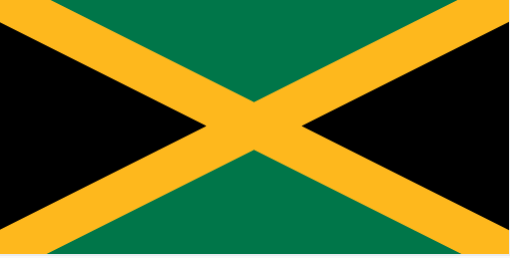
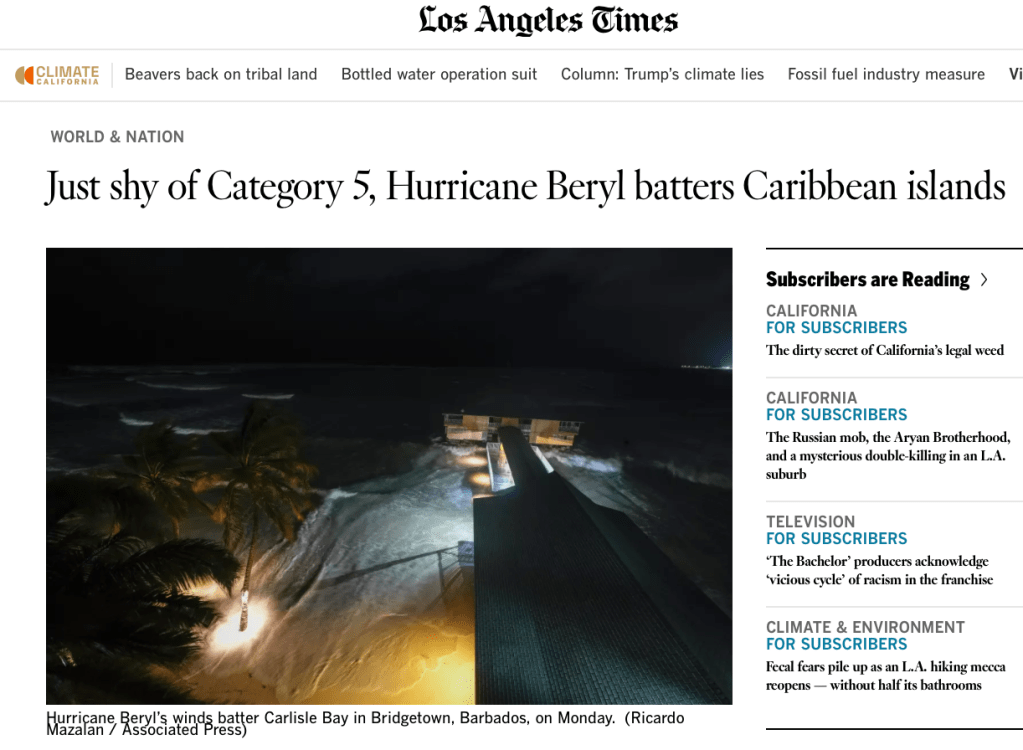
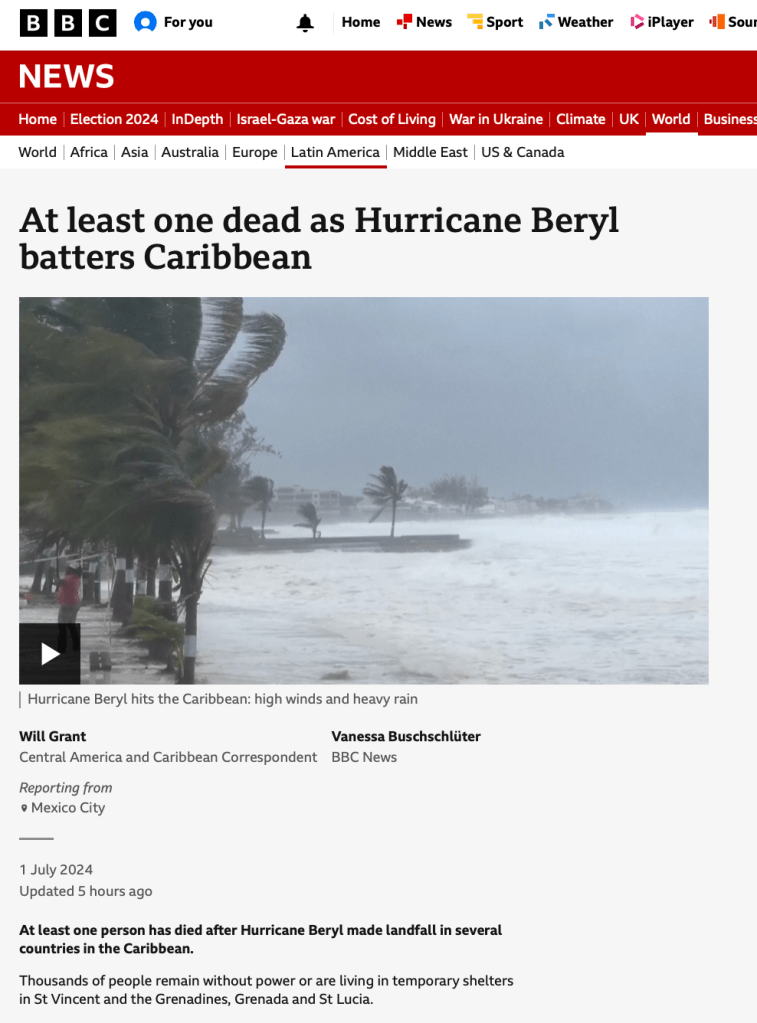
YOU SEE THE EXTENT OF HUMANITY in times of severe crisis. The coming together as ONE has been overwhelmingly evident, following the impact and destruction of Hurricane Beryl in the Caribbean – It is still there; Jamaica is the latest to suffer at the time of writing. Our thoughts go out to all. Personally, I am yet to have much contact and confirmation of how my family is doing in Carriacou. However, the outpouring of support and offer of help have been incredibly touching. Jamaica’s motto is, “Out of Many, One People!’ I agree!
IT IS HEARTWARMING to have faith in humanity where the offer of help is not based on the social constructs of race, gender or any other personal characteristic. Out of many, ONE! Forget the social construct of the falsehood of race. As I have written many time, there is ONE race, the Human Race. There is no biological or anthropological suggestion that peoples around the world of different aesthetic shades and features, Homo sapiens, cannot have offsprings, who are and will also be Homo sapiens.
“1774–Homo sapiens, n.The biological species that comprises modern man, including all humans alive today…” OED
“Species – Biology. the major subdivision of a genus or subgenus, regarded as the basic category of biological classification, composed of related individuals that resemble one another, are able to breed among themselves, but are not able to breed with members of another species.” Dictionary.com
TONI MORRISON (copyright The Guardian)
AS A BARRISTER who specialises in employment law, it would be remiss of me not to refer to the Equality Act 2010 that defines ‘Race’ as including, “(a) colour; (b) nationality; (c) ethnic or national origins.” It is important to recognise and note that this is a ‘statutory‘ definition of race for the purposes of anti-discrimination laws in the U.K. IT IS NOT an endorsement of the social construct of ‘race.’ Its very existence, its raison d’être, is due to the social construct of ‘race’ and discrimination because of ‘race’ and not a legal overruling of the widely recognised and accepted biological or anthropological definition of the Human Race.
WHEN WE HEAR POLITICIANS refer to ‘immigrants.’ Putting aside the underlying theme by some in order to divide. Immigrants are NOT a race. This is the same for Emigrants. It is simply a relative term based on geography and origins. X is called an immigrant in Y because X does not come from Y. Simple! X is called an emigrant in X’s country of origin because X has gone to Y. Simple! These have absolutely nothing to do with the social construct of race. As for culture, that’s another blog for another day.
THINK ABOUT IT!
It’s simple!
“Out of Many, One People!’
I THANK EVERYONE for their continuing and overwhelming support.
AS WE FLOCK TO VOTE for our next Government, what is the status of the various promises made by the parties? We have heard about opponents talk about broken promises. So, who better to explain it than an employment barrister? Ok! There are more and better qualified to say than I. But, in the interest of freedom of speech, I put my two pennies worth in on the issue of Manifestos. ‘A manifesto is a publication issued by a political party before a General Election. It contains the set of policies that the party stands for and would wish to implement if elected to govern.’
EFFECTIVELY, there are only three ways this can go. A Government seeks to implement what it has in its manifesto; thus, keeping a promise. A Government does not seek to implement what it has in its manifesto; thus, not keeping a promise. A Government does the opposite to what it has in its manifesto; thus, not keeping a promise and, going further, reverses what it said it would do or would not do i.e. it promises it would not do X and, yet, does X.
IN A CONTRACT, we have an invitation to treat, an offer, an acceptance of that offer and consideration, being something of value. To break it down. A price tag is an invitation to treat. That is why you can offer the seller what is on the price tag for their product and they can decline to accept it even though the offeror offered what was on the tag. However, if the seller accepts, the consideration is paid – it doesn’t have to be money, it just needs to be of value; for example, the parties (seller and buyer) may agree on the buyer washing the seller’s car rather than the buyer parting with money. There is now a binding contract. A breach of this contract would entitle a party to damages – nominal or substantial.
Contract of Employment by Ryan Clement
HOWEVER, accepting the terms of or promises contained within a manifesto is not to be confused with the concept of, and what philosophers would refer to as, a social contract. In other words, the manifesto is not an offer to treat on which we make an offer by voting for the party and on which the party accepts and forms the Government to implement that promise, failing which there would be a breach of a social contract and we, the people, call a General Election for a change. If only!
Mary Beard on Political Rhetoric
BUT there is a convention, which hardly, if ever, gets mentioned. For Parliament to pass it laws – not, contrary to some belief, the Government – there would be readings in both Houses – Commons and Lords. On occasions, the Lords would challenge proposed legislation (a Bill) to such a degree that its proposed changes significantly seeks to alter that desired by the Commons, or various sections are abandoned in their entirety. That is the Parliamentary checks and balances at work. So, what happens in the event that the Government seeks to implement a policy/promise that was/is contained within its manifesto and for which, naturally – by way of having a Parliamentary majority – the people voted? Well, this is where the Salisbury Doctrine or Convention comes into play, which, ‘emerged from the working arrangements reached during the Labour Government of 1945-51, when the fifth Marquess of Salisbury was the Leader of the Conservative Opposition in the Lords. The Convention ensures that major Government Bills can get through the Lords when the Government of the day has no majority in the Lords. In practice, it means that the Lords does not try to vote down at second or third reading, a Government Bill mentioned in an election manifesto.’
SO, now you know. If it’s in the manifesto and the government seeks to keep a promise, it should become law without too much trouble. You read it here, first!
IN THIS BLOG, I share my personal connection with the beautiful Caribbean islands of Grenada, Carriacou and Petite Martinique, the first two being where my parents originated; Saint Andrew and Petitie Carenage respectively.
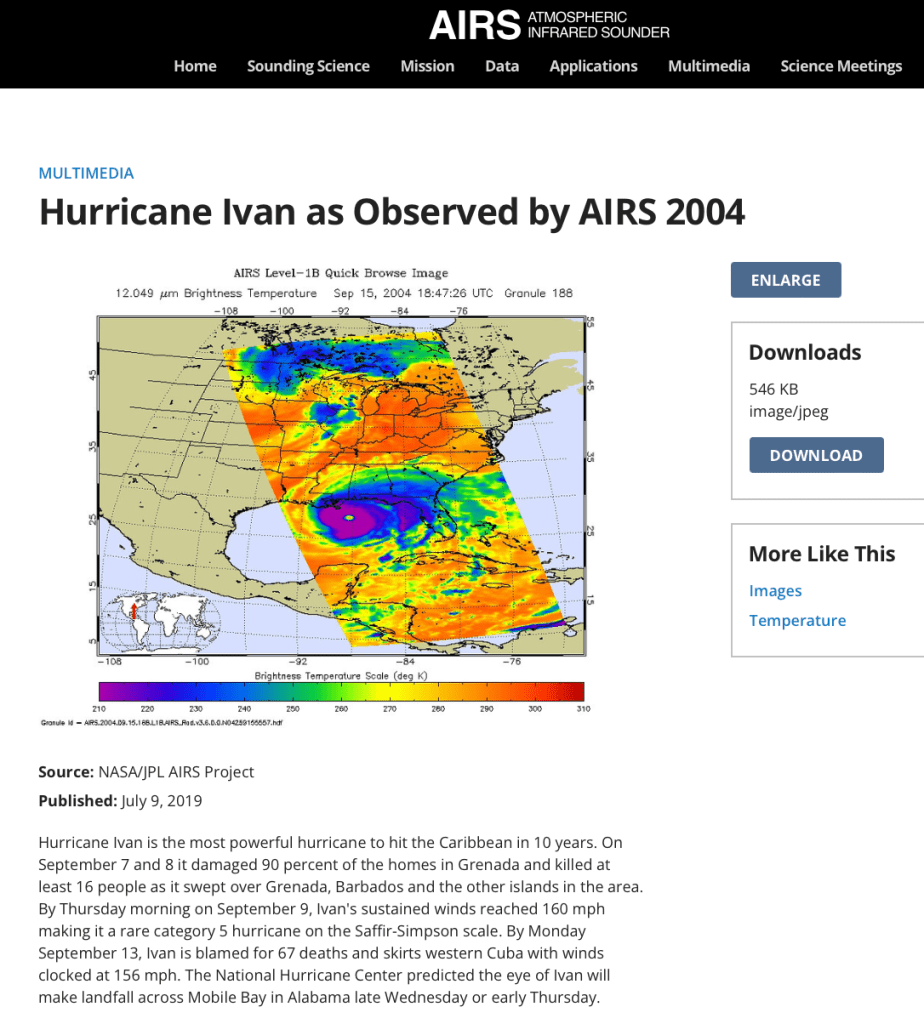
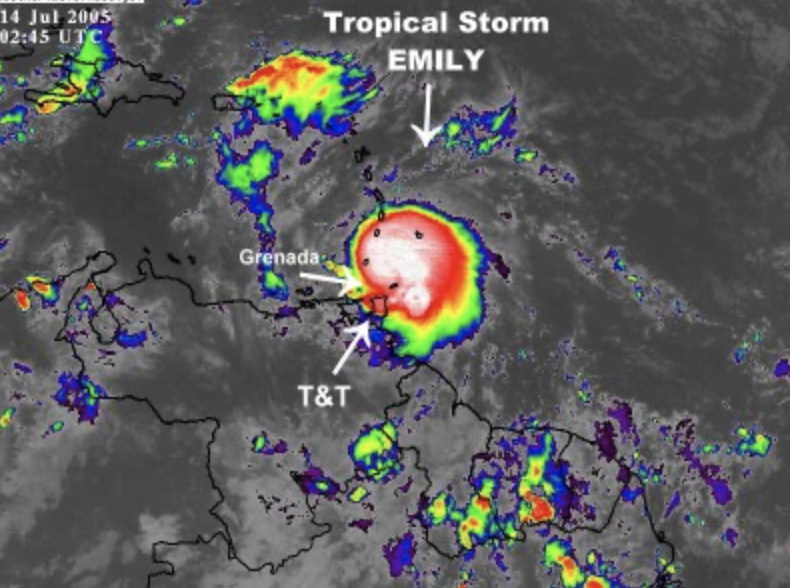
NO CHILD OF MY GENERATION with parents from the Spice islands would not have been told of what their parents went through when Hurricane Janet hit the islands in 1955. From the year 2000 I visited Grenada annually for 5 to 6 weeks at a time. Therefore, in 2004 I, personally, witnessed the destruction caused by Hurricane Ivan and, in 2005, that caused by Hurricane Emily.
BOTH were Category 3 storms. You can therefore imagine – or may be none of us truly can unless experienced it – the impact Hurricane Beryl had on Grenada, Carriacou, and Petite Martinique on 1 July 2024, which was a Category 4 to 5. It has severely affected and damaged the islands, particularly Carriacou.
HOWEVER, Spice islanders have resilience and big hearts, and shall get through this. I am confident about that. As I write this piece Jamaica is bracing itself for the impending impact of Beryl. It has already caused devastation to other islands, including my adopted St. Vincent and the Grenadines.
DUE TO OTHER MATTERS occurring at the time such as UK Election, French Election, US Presidential Campaign, the destruction and impact of Beryl have not quite got the attention and airtime it should. Fortunately, many of us do know and are playing our parts accordingly. Personally, I am still to hear from family members currently living in Carriacou.
RECENTLY, I had the pleasure of chatting to Dianne Greyson of #EthnicityPayGap who has been championing the cause of highlighting and addressing pay gap due to workers’ ethnicity. Dianne spoke about her work and some of the challenges she faces. We also spoke about Colourism, which is a term I first encountered many years ago through one of my favourite authors, Alice Walker. As a barrister who specialises in employment law, I identified a potential problem in the area of direct discrimination because of race where a claimant needs to have a comparator. The statutory definition of ‘race’ includes— (a) colour; (b) nationality; (c) ethnic or national origins. If a claimant relies on colour on the basis of colourism, arguing, for example, that they were treated less favourably than a person of the same race in respect of colour under the Equality Act 2010 but of a different complexion, which, in essence, is basis of colourism, then it would be interesting to see whether the courts would accept the claimant’s comparator as being a correct one.
Asked what gave her the idea to do the good work she is doing on ethnicity pay gap, Dianne said, “It was a lightbulb moment.” She was, “driving along,” and had been thinking about it and wondering, “why weren’t people addressing it?” Influenced by the #MeToo movement, she thought, “What can I do? And I literally came up with the idea.” From that she came up with #EthnicityPayGap to, “show solidarity with people who were going through it,” but that just literally spiralled into something else because she shared it on LinkedIn and suddenly people were asking, ‘where did you get this t-shirt from?’ “So I had to go and find someone to replicate what I designed. And through all that time I was starting to do more research and understanding the magnitude of the situation because obviously in the beginning you think this is not fair. But then you look into it and you think, ‘THIS REALLY ISN’T FAIR!‘”
DEAR SIR, I had a good day today, I think. I went to see a career advisor who asked me what I wanted to be? I told him if I couldn’t be a footballer, I wanted to be a doctor or lawyer because they’re good jobs. He told me that I had to be very clever to do those and told me about jobs I didn’t ask about. I wondered if he had spoken to Mr G_, my maths teacher, who told me that all I was interested in was football. I was sad because maths was my favourite subject and I thought I was good at it. Last week there were comedians on the television who were referring to people who are like me with horrible names that the audience laughed at. I didn’t find them funny because when I go to school others call me the same names in the playground and laugh. I don’t like that feeling. I feel picked on. There was also a comedy show with the words ‘Love’ and ‘Neighbour’ in its name that showed anything but Love to the Neighbours! And there was Tarzan, who was brought up by an Ape and yet he was seen as braver and wiser than people who looked like me who were not raised by a primate. Maybe Mr G_ and the career adviser watched those programmes, too, and didn’t want me to be disappointed. Didn’t want me to raise my hopes too high, be too ambitious. But what do I know? My best friend, D_, went to see his Gran over the weekend. I wish I could see mine. Why is Nenen in Grenada? How did she get there? Why did mum and dad come here? I guess I’ll find out one day.
To Sir with Love by Ryan Clement, barrister
The Present
DEAR JUNIOR, it has been a while. Let me update us. We made it neither as a footballer nor as a doctor. But we did make it as a lawyer, a barrister to be precise. In fact, law was our second profession, so we ended up with two! Glad we didn’t let the career advisor’s and Mr G_’s advice define us and determine our destiny. It is ironic we mentioned Mr G_ because we went on to gain a Distinction in Mathematics, the very subject he taught us. Things have changed much since we were young. Today, we advocate equality of opportunity in various forms and on various platforms. Sadly, however, there are still many perceptions to be addressed. Sometimes people aren’t even aware of their adverse treatment of others. Some label this as the effects of unconscious bias. We now have diversity awareness and inclusion as part of our lexicon. The former is a matter of observation. However, the latter is a matter of implementation, on which there is a lot more work to do. We will be pleased and saddened in equal measures to know that we attended 3 universities and gained three degrees, one of which is a Master’s in Law. And yet, we have not once been taught how Nenen or our ancestors got to be in Grenada. In fact, we have never formerly been taught how your uncles, aunts and cousins got to be in Trinidad or elsewhere in the Caribbean. Symbolically, it may appear, the hospital in Chiswick where we were born and our primary school in Fulham no longer exist. They have been replaced by structures deemed more important. It is as if our ancestral history is deemed likewise. Mum and dad came here, worked hard and more than contributed to the economic development of the country in which we were born and educated. Recently, it was announced that how Nenen got to be in Grenada from Africa, why mum and dad came to the UK and their contributions will be taught in some schools as part of their curriculum. Maybe in the future when our children write to us, they will be more enlightened about Nenen, mum and dad through their formal education than we were.
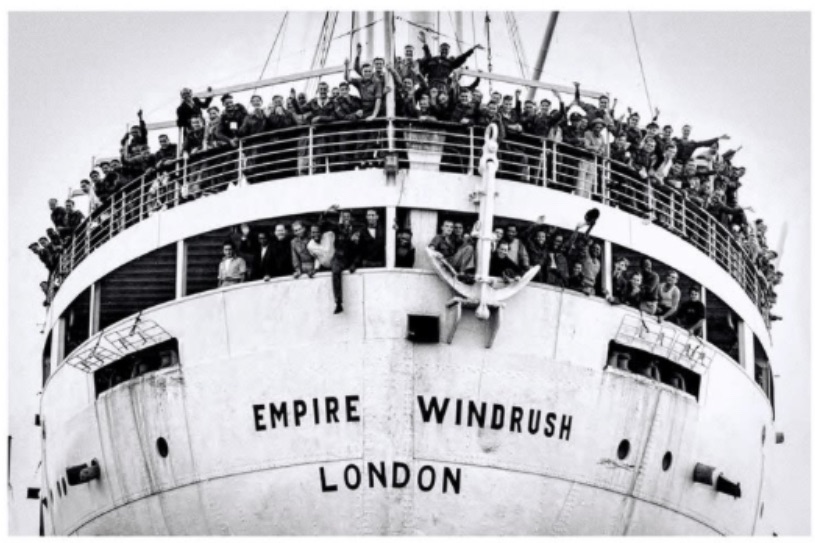
TODAY IS WINDRUSH DAY 2024. Of course, not everyone from the Caribbean in the 1950s and 1960s arrived on the famous Empire Windrush, which, incidentally, was a German built ship initially named MV Monte Rosa.
Empire Windrush
HOWEVER, it is symbolic of a generation that left the sunny shores of the Caribbean to make their way to what was then known as the Motherland, England. My parents’ generation, The Windrush Generation, were told that London was paved with gold. For some, it was. For many, it wasn’t. Most were invited to work to fill the vacancies that the country struggled to or was unable to fill by the local workforce. Many came with a 5-year plan to work, earn money, pay their taxes and return to Paradise, The Windies. However, those dreams did not materialise for most as they remained beyond their initial plans as they continuedto contribute to the country’s prosperity. Many were not to see Paradise again!
WITHOUT QUESTION, many, if not most, faced adversity from those too ignorant to know better. It is of no coincidence, therefore, that the first Race Relations Act was enacted shortly after their arrival, in 1965, followed almost immediately 3 years later by a second, reinforced Act, in 1968.
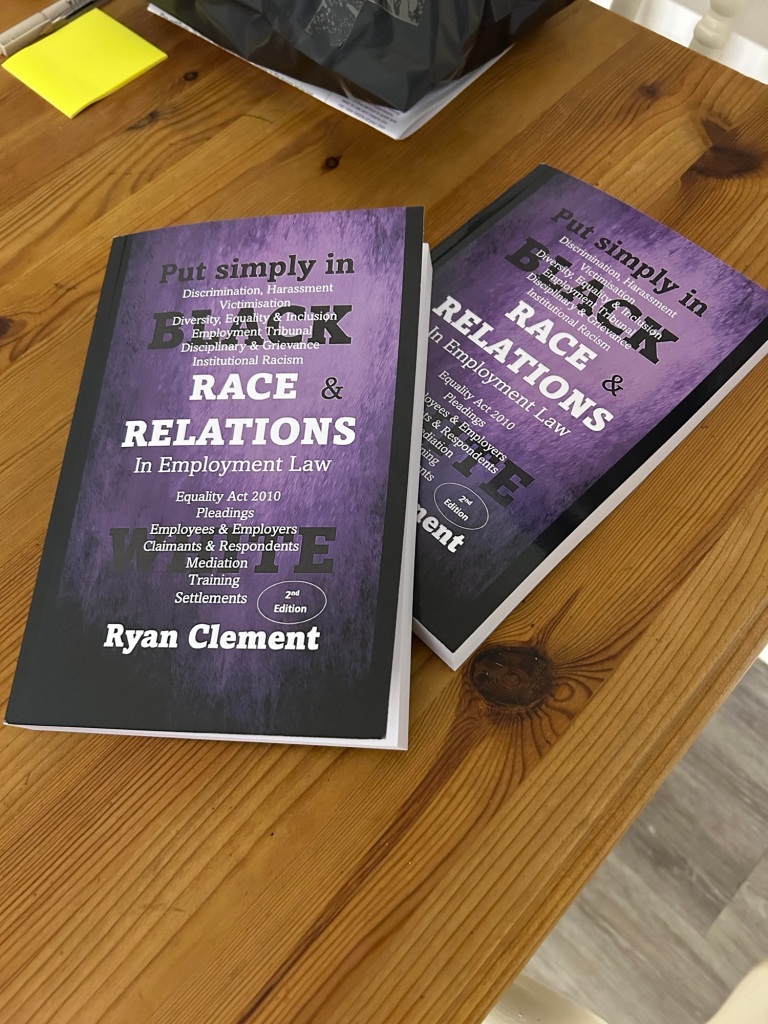
Race Relations in Employment by Ryan Clement
UNFORTUNATELY, the plight of how many from the Caribbean came to be here or their connection with the Motherland through colonialism or their contribution to Britain’s cause during the two World Wars were not part of the schools’ National Curriculum. So most of us schooled in the United Kingdom had no formal education, up to Primary School level, on how either our parents or our friends’ parents fit in with British History. That is a big failure on and void in part of our educational system.
RECENTLY, I had the pleasure of chatting with Cllr. Michelle Simmons-Safo who, amongst many things, tells us the story of her mother’s and father’s journey to the United Kingdom and concludes with the plight of the Windrush Child with a sequel poem of the same name to accompany her equally beautiful poem, Bound for Britain. I guarantee you, you are going to enjoy these as much as I did.
Barrister Ryan Clement meets Cllr Michelle Simmons-Safo
SO, FINALLY, to Windrush 2024, I say, to coin a phrase from Michelle’s poems, “Windrush Generation, WE salute you!” ❤️
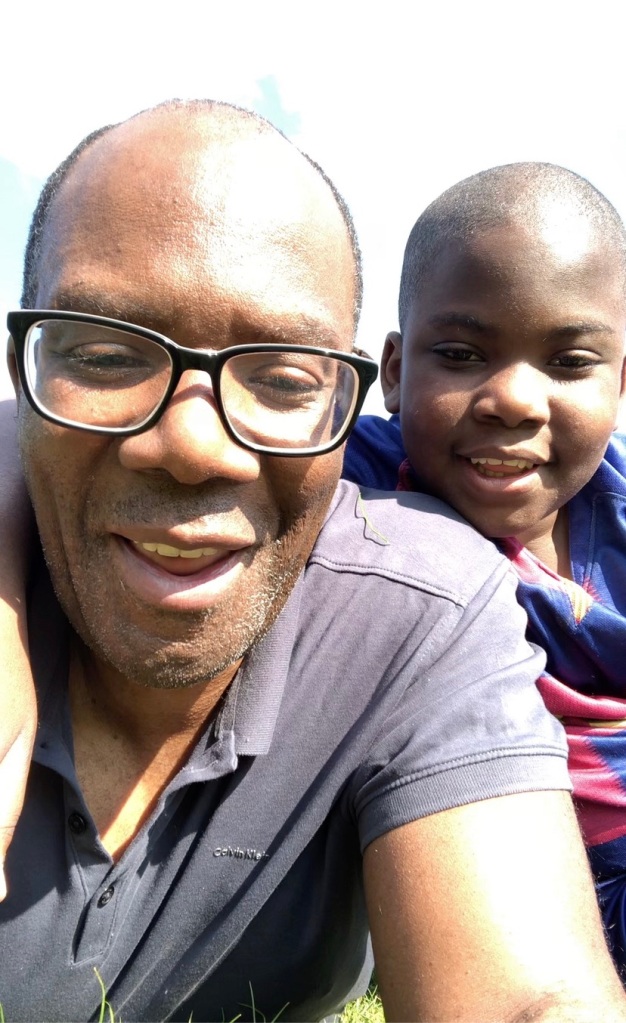
So, for the shortest blog ever, just wishing you all a Happy Father’s Day, and I mean ALL, not restricted or limited to biological fathers. But you know who you are! Also, remembering the millions of forefathers on whose ancestral shoulders we now stand. We owe YOU!
THIS SHORT BLOG is titled ‘We Reap What We Sow! 2’ because it follows the first offering, which was published last month – ‘We Reap What We Sow!’
AS A BRIEF RECAP, on 24 May 2024 I spoke at Our Lady of Lourdes Catholic Primary School & Nursery in London as part of its Careers Week. I brought my court attire of wig and gown (robe) with me, which some of the children tried on and they (the children) asked, and were encouraged to ask, me many questions, which, of course, they did. I was questioned about my journey to becoming a barrister and a writer. There were no prohibitions in asking me any question(s). It was an absolute joy to meet these inquiring minds.
The school made sure that these young, keen acorns knew that they could achieve/acquire any profession, trade, skill (and much more) if they so wished and desired to do so. I agree!
At the end of the day, I left the school and returned to work because I was due a reserved judgment later that afternoon. As I drove South I reflected on an enjoyable morning.
SOME TIME LATER, I had cause to visit the school for an unrelated matter. On the desk in front of me was a large white envelope, which bore my name. I was not expecting anything and, therefore, had absolutely no idea what the envelope contained. I opened it cautiously and was met with an amazing set of handmade cards from some of the children thanking me for attending and participating in their Careers Week. What an honour!
ALL CARDS WERE AND ARE EQUALLY SPECIAL and ALL are my FAVOURITES! However, when I read, “Dear Ryan. Thank you so much for coming to speak to us about your wonderful career. You have inspired me to follow my dreams,” it made my horrific journey back, being stuck in my car in traffic jams on the A406 (North Circular), M40 and M25 so much worth it, which I would not hesitate to do all over again.





 Ryan Clement